




One year ago, Congress defunded public media. Now that we're 100% community funded, please become a sustaining member or increase your existing membership today.
It's Coyote Mating Season In Los Angeles. Here's What You Should Know

Young coyote roaming the streets of Southern California in plain daylight.
(
Lux Blue/Getty Images
/
iStockphoto
)
I was glad the coyote was getting in its steps for the day.
Last night, I spotted the wild canine sauntering around my Highland Park block with the confidence of a lifetime Venice Beach jogger. It darted a quick glance my way before continuing its route, nonplussed by my presence and my very cool new tracksuit.
It was a true casual encounter. Which makes sense — they belong here, and “they’re not going away,” said Ken Pellman, public information officer for the L.A. County Agricultural Commissioner’s Office.
And for the next two months they're getting all dolled up, flirty and frisky — it’s mating season, after all.
“There's going to be coyotes out there. And even if a particular coyote gets removed, there'll be another coyote eventually to take its place,” Pellman said. “They're highly adaptable. They'll have larger litters if they sense that there's more room to spread out because some coyotes have been taken away.”
The breeding season started in January

Sponsored message
California coyotes breed in January, February, and March. Gestation takes about two months, so pups are born in March through May. Both natural cycles can cause changes in behavior, according to Elizabeth Miller, staff biologist at the U.S. Department of Agriculture’s Wildlife Services headquarters.
“To prepare their own bodies for mating, you know, the process of pregnancy, labor, you know, delivery and then raising those pups, you might imagine that they're trying to secure a safe area to do that, and then also satisfy those nutritional requirements,” Miller said. “So you might see that translate to aggression, and bolder behavior, and more desperation to obtain those two resources.”
Coyotes may be more emboldened during these times, venturing into areas with more human activity and even seeking shelter and possible spots for their dens right in your backyard.
“There may not be other suitable alternatives, you know, a park may be the most green space and an area of backyard may be the most green space in an area,” Miller said. “So you do see those interactions increased, the more densely populated an area is, just because the overlap is so much more. ”
These behavioral changes can all spell peril for pets. A coyote’s perspective on our domesticated pals isn’t a particularly kindhearted one.
Sponsored message
“To a coyote, a pet is either a territorial threat or an easy meal,” Pellman said.
Here's what to do if you encounter bold coyotes
Well first, be mindful of your surroundings. At the first glance, you might clock a roaming coyote as a neighborhood dog off-leash. Or you might gauge their lack of interest as a one-off encounter. But that incident is unlikely to be isolated.
As Miller told us: “If there's one in the area, there's likely another one."
Then, there’s action. “Hazing” is a tactic used to ward off coyotes, but it can come in different forms, both active and passive. During an encounter, even a seemingly subtle one, you should be the bold one.

A coyote in Elysian Park.
(
Samanta Helou Hernandez
/
LAist
)
“Be aggressive in a way that is safe to you,” she said. “Shouting, trying to make yourself look big, you want to make sure that you appear as an adversary, that the animal weighs the risk of taking [you] on and decides not to…Make yourself look big, get on a rock, open your jacket, things of that nature.”
Sponsored message
Take these steps to prevent those encounters
Prevention is also key. Making your home unappealing to the ol’ canis latrans can be crucial.
“Pick up any fallen fruit, make sure that they're not able to get into your trash. And bring your pets inside at night. Keep an eye on your pets,” Pellman said. “You might even want to clear away bushes and brush that can form, kind of cover for rodents, rats, mice, squirrels, those all attract coyotes.”
And reporting sightings can give your local agencies a better idea of species activity to inform possible intervention, if necessary.
“Your first stop is your city,” Pellman said. “If you live in an incorporated city, inform the city. If you don't live within an incorporated city, then your county government is your next stop.”
And if your encounter turns into a dangerous one, “that’s 911 time,” per Pellman.
Trending on LAist
-
 Superior Court judges oversee courtroom proceedings and trials across all of Los Angeles County.
 -
 City Councilmember Nithya Raman said Israel is committing genocide in Gaza while Bass said the term does not apply.
 -
 California governor rejects legislation sponsored by LA fire victims, who had spoken out against his wildfire-liability effort.
 -
 The unusual delivery method — and the homemade bagels — come from transplant Richard Lee.
 -
 The opening of the long-awaited LAX People Mover train is getting pushed back, again.
 -
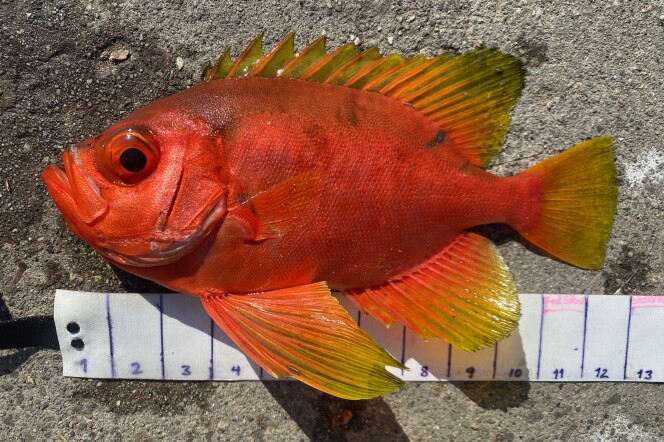 The creatures are here because of warm waters associated with El Niño, but the climate system could also threaten native species that aren’t used to the heat.


Best of LAist


