




One year ago, Congress defunded public media. Now that we're 100% community funded, please become a sustaining member or increase your existing membership today.
Court blocks ammunition background checks in new blow to California’s gun control framework

A box of buckshot is on display at a gun shop in Fresno County.
(
Larry Valenzuela
/
CalMatters / CatchLight Local
)
The 9th U.S. Circuit Court of Appeals struck down California’s first-in-the-nation law requiring background checks for ammunition purchases, another blow to the state’s gun control framework that has been pared down, case by case, since the U.S. Supreme Court dramatically expanded gun rights in a monumental 2022 decision.
About this article
This story was originally published by CalMatters. Sign up for their newsletters.
The California law that forced ammunition purchasers to pass a background check was passed by voters in 2016. Gov. Gavin Newsom, at the time the state’s lieutenant governor, championed the initiative and was its primary advocate.
In 2018, before the law went into effect, a group of gun rights advocates and ammunition vendors sued to block the law.
They were successful — in 2020, a federal district court judge handed down an injunction against the background checks of ammunition purchasers. But at the time, the 9th Circuit paused that order and allowed the law to take effect.
Two years later, the U.S. Supreme Court ruled in New York State Rifle & Pistol Association, Inc. v. Bruen that a New York concealed-carry law unfairly constrained people’s right to carry a gun, and California’s gun control regime was thrown into chaos.
The 9th Circuit then sent the case on background checks for ammunition purchases back down to the federal district court. That court again ruled against the background checks.
Sponsored message
Today’s ruling helped clarify what a post-Bruen future could look like.
-
 An LAist investigation found officials awarded millions to a homeless services group even after it was flagged for failing to do its job. Its leader pleaded not guilty.
 -
 LAist wants to help you make sense of El Niño, the climate pattern that can cause dangerously wet winters in Southern California.
 -
 US set for largest mass visa revocation in history targeting up to 200,000 foreigners, officials sayIf it happens, the move would be the largest single mass revocation of visas in U.S. history and would likely face legal challenges.


“Given the fees and delays associated with California’s ammunition background check regime, and the wide range of transactions to which it applies, we conclude that, in all applications, the regime meaningfully constrains California residents’ right to keep and bear arms,” Justice Sandra Segal Ikuta wrote in the 2-1 majority opinion.
The law required face-to-face transactions from a licensed dealer. That effectively banned internet sales of ammunition, and any ammunition purchased out of state required that it be delivered from that state to a licensed dealer in California.
Purchasers would swipe a government ID and their information would be run through four databases, which searched for their criminal histories, any firearm prohibitions for mental health, restraining orders and whether they were on a wanted persons list. They would also have to pay a fee to have their information run through the state Justice Department’s firearms data repository.
The question posed by the Supreme Court in the Bruen decision is whether a law “meaningfully constrains the right to keep and bear arms,” as specified in the Second Amendment, and whether it is consistent with the country’s “historical tradition of firearm regulation.”
Using that test, the 9th Circuit previously agreed with California that an Alameda County zoning law prohibiting gun stores within 500 feet of a residential area, or a law that bans firearm sales on state property, are both constitutional. The reasoning behind those decisions was that people could still buy guns in Alameda County, or somewhere besides state property.
Sponsored message
The Rhodes case is different, the appellate court ruled, because it meaningfully constrains people’s ability to purchase ammunition, which previous 9th Circuit decisions have found is foundational to a person’s ability to own guns.
In court, the state’s attorneys also proposed that California’s ammunition sales law conformed to the United States’ historical tradition of regulating guns, citing colonial-era laws or laws written after the Civil War.
The court dismissed those arguments.
“Because none of the historical analogues proffered by California is within the relevant time frame, or is relevantly similar to California’s ammunition background check regime, California’s ammunition background check regime does not survive scrutiny under the two-step Bruen analysis,” Ikuta wrote.
In a fiery dissent, Judge Jay Bybee said the decision failed to correctly apply the Bruen test, and that using the logic of the decision, any firearms regulation could be interpreted as a violation of the Second Amendment.
“It is difficult to imagine a regulation on the acquisition of ammunition or firearms that would not ‘meaningfully constrain’ the right to keep and bear arms under the majority’s new general applicability standard,” Bybee wrote in the dissent.
This article was originally published on CalMatters and was republished under the Creative Commons Attribution-NonCommercial-NoDerivatives license.
Trending on LAist
-
 This is likely to be the hottest heat wave of the year — so far. Warnings from the National Weather Service are in effect from Tuesday morning through Friday evening.
 -
 The new rules for defensible space around homes are some of the strictest in the country, but firefighters and others stress their importance.
 -
 Bass is the first mayor to appoint herself to the commission that oversees the region's top homelessness agency. Her attendance record could trigger removal under the bylaws.
 -
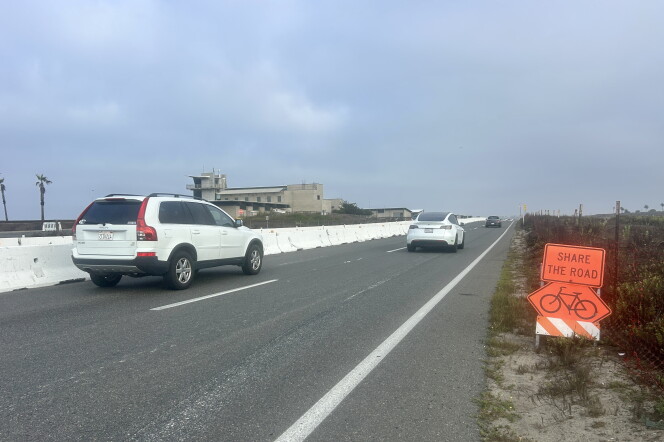 The 10-mile stretch of Highway 1 has seen frequent collisions between cyclists and vehicles.
 -
 After a recent outbreak, public health experts outline a number of ways to prevent the flea-borne bacteria.
 -
 California’s law to slash plastic packaging is running into a fight over who pays — and how much.


Best of LAist


