




One year ago, Congress defunded public media. Now that we're 100% community funded, please become a sustaining member or increase your existing membership today.
Newsom proposes to freeze Medi-Cal enrollment for undocumented immigrants

Governor Gavin Newsom is proposing scaling back access to healthcare for undocumented immigrants in order to save billions.
(
Justin Sullivan
/
Getty Images
)
A year after granting Medi-Cal access to low-income immigrants without legal status, Gov. Gavin Newsom is proposing to freeze enrollment of new recipients and charge premiums in a move expected to save the state more than $5 billion.
Under Newsom’s proposal announced Wednesday, Medi-Cal — the state’s health insurance program for low-income people and those with disabilities — beginning in 2026 would no longer accept new enrollees 19 and older who lack permanent legal status.
The 1.6 million immigrants already signed up would not lose their Medi-Cal coverage, and children could still enroll. All undocumented Californians would still be covered for emergency medical and pregnancy care — so-called “limited scope” coverage that is paid for with federal dollars. But those who don’t enroll before January 2026 would be uncovered for other medical expenses, such as prescription drugs and doctor’s visits.
Before the changes could go into effect, the California Legislature would have to approve them in the state budget. Democratic lawmakers have so far largely balked at making major cuts to Medi-Cal coverage for immigrants.
-
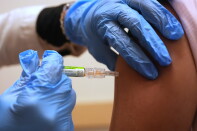 Flu season typically starts in October or November. But it looks like the flu started to pick up in September this year.
 -
 As checks from President Donald Trump for health costs hit millions of mailboxes, a poll shows Americans don't trust Republicans on healthcare.
 -
 Community Space Food Bank says first-time visitors have surged as CalFresh benefits are reduced or lost. The food bank is now trying to raise $17,000 to stay open.


State Sen. Scott Wiener, a San Francisco Democrat and chair of the Senate budget committee, said at a luncheon last month that despite fiscal uncertainty, Senate Democrats want to ensure healthcare coverage for immigrants in California.
“These are folks who are working, paying taxes. They should have access to health care,” Wiener said.
Sponsored message
Newsom also proposed that adults with “unsatisfactory immigration status” should pay a $100 monthly premium starting in 2027. Those are people whose immigration status makes them ineligible for federal Medicaid, including those with lawful status. The $100 premium is less than the average subsidized premium paid under Covered California, according to the governor’s office.
Together these moves would save the state $5.4 billion by 2028-29, Newsom’s office said, helping to address the state’s projected $16 billion deficit.
Newsom’s office said the deficit required “tough decisions” but that the governor remained committed to protecting immigrants.
“These changes are designed to preserve that commitment, protect coverage for millions of Californians, and preserve the strength of our values and health care system,” according to the governor’s fact sheet.
The decision is a bruising blow to Newsom, who ran for governor on the promise of universal health care. California was the second state after Oregon to offer full-scope health insurance to all immigrants without legal status.
These are folks who are working, paying taxes. They should have access to health care.
— State Sen. Scott Wiener
Newsom’s office blamed wide-ranging tariffs imposed by the Trump administration for weakening the state’s expected revenues, but the Medi-Cal program was already experiencing cost problems related to growing enrollment and increasing costs of prescription drugs.
Sponsored message
In March, the administration reported a $6.2 billion shortfall in its Medi-Cal budget, and had to appropriate additional funds to pay providers through the end of June.
The Department of Health Care Services, which oversees Medi-Cal, cited a number of reasons for exceeding its budget, including that it was spending about $2.7 billion more than anticipated on people without legal status.
The state spends about $8.5 billion a year from the general fund to cover immigrants who are in the country without legal authorization, according to the Newsom administration’s estimates.
The request for additional dollars was criticized by Republicans in the Legislature, who say the governor and Democrats over-promised on what the state could afford.
Newsom’s call to limit enrollment comes as Congress is proposing major spending reductions to the federal Medicaid program. (Medi-Cal is California’s name for Medicaid.)
One proposal aims to penalize states that cover unauthorized immigrants. That penalty would come in the form of reduced federal funding for the Affordable Care Act expansion population — largely able-bodied adults without children. If enacted, that penalty could cost California about $3.2 billion a year in federal funding, according to the Center on Budget and Policy Priorities.
CalMatters reporter Yue Stella Yu contributed to this story.
Trending on LAist
-
 The Los Angeles County Medical Examiner has confirmed 27 deaths, a toll that rose after structure-to-structure searches by authorities.
 -
 Messages went out at 4 p.m. Thursday and 4:24 a.m. Friday, rattling the nerves of an already shaken region.
 -
 We have tips from California's insurance commissioner on how to contact the state and start the claims process, and how to keep you and your loved ones from falling for scams.
 -
 Experts say parents should validate feelings and create avenues for kids to express themselves.
 -
 Why did hydrants run dry in the midst of a conflagration? What caused it, and can it be prevented?
 -
 Homes, businesses and cherished community spots went up in flames.


Best of LAist


