By David Rodriguez and Kevin Martinez | LAist and The LA Local
Published August 13, 2026 10:00 AM
The LAist community engagement team tabled at Café Calle in South Central for Local News Day LA.
(
Alejandra Santamaria
/
LAist
)
Topline:
Recently LAist, The LA Local and 12 other L.A.-area newsrooms collaborated to build connections with community members at coffee shops across Los Angeles on the same day. The event — which we called Local News Day LA — demonstrated the power of collaboration and community relationships in L.A.'s local news ecosystem.
Why this was unique: Although LAist has made it a recurring practice to meet community members in person to hear what's on their minds, doing it alongside our local news parters on the same day helped bring hundreds of Angelenos closer to local newsrooms.
Any newsroom can do this: If you're at a newsroom that's never done a community pop-up event, LAist and The LA Local have tips on how you can get started.
Read on... for what we learned from the first-ever Local News Day LA.
As local news organizations nationwide navigate funding cuts, rapid changes in technology and shifting audience habits, building relationships directly with communities has become more important than ever. It’s also something newsrooms don’t have to do alone.
On June 27, LAist, The LA Local and 12 other L.A.-area newsrooms came together to meet community members at coffee shops across Los Angeles County. We called it Local News Day LA.
Here are five things we learned from holding this event for the first time, why it was worth it, and how other local newsrooms can organize their own events.
1. Communities will show up when you show up
This pop-up event, organized by The LA Local, allowed residents across the county to meet the journalists covering their communities.
A total of 14 media partners participated. In addition to LAist and The LA Local, newsrooms included CalMatters, LA Public Press, L.A. Taco, Calo News, Long Beach Post, The Eastsider, Los Angeles Reporting Collective, LA Sentinel, Q Voice News and USC Annenberg Media.
More than 400 people participated in the event by talking with a local journalist. For some, it was the first time they'd ever heard of that newsroom.
While LAist and The LA Local have both made it a recurring practice to meet community members in person to hear what's on their minds, many other newsroom partners didn't have experience with this kind of event. Afterward, journalists at some of those newsrooms said they were surprised that local residents actually wanted to meet them and share story ideas or feedback on recent coverage like the Lineage Fire in Boyle Heights.
CalMatters spoke with community members at Yia Caffe in Boyle Heights for Local News Day LA.
(
The LA Local
)
Others were also amazed at people’s willingness to travel from coffee shop to coffee shop to connect with as many media partners as possible.
Local News Day LA gave them a reason to come out and partners to help with the logistics and outreach — and people showed up to meet them.
2. What we heard from residents checked our assumptions and shaped our reporting
LAist spoke with dozens of community members at Café Calle in South Central for Local News Day LA. Among other topics, they shared with us that the effect of the immigration raids is still present in South Central, the neighborhood needs more spaces and resources for school-age kids, and that residents are frustrated by the amount of trash on the streets, even after cleaning it up themselves.
At a few coffee shops around L.A., The LA Local and Boyle Heights Beat spoke with residents in Koreatown, Inglewood and Boyle Heights. At OpenMarket, folks shared their concern regarding street safety.
At Asteroid Vinyl Cafe in Inglewood, residents expressed frustration over what they said was lack of transparency on Destination Crenshaw’s timeline for completion. And at Picaresca Cafe, community members shared their thoughts on the elected officials’ response to the Lineage Fire that impacted Boyle Heights and East LA.
The Long Beach Post staff spoke with community members at Wrigley Coffee in Long Beach for Local News Day LA on June 27.
(
Kris Kelley
/
The LA Local
)
The Long Beach Post connected with residents at Wrigley Coffee in Long Beach. Some asked for more coverage of small businesses, more coverage in West Long Beach and more investigative reporting.
These conversations reflected what people were thinking about long after the day's headlines had faded and gave participating newsrooms strong signals about how to focus their time and energy next.
3. Collaboration can be more powerful than competition
Local News Day LA was the first collaboration held across all our news partners — and it started small. In 2025, LAist and The LA Local shared best practices and tips with each other from our respective experiences tabling and meeting community members to see what we could learn.
We then started brainstorming a larger collaboration, eventually rallying our partner newsrooms and holding a workshop on what we learned about planning a successful tabling event, engaging residents and collecting feedback to influence our journalism.
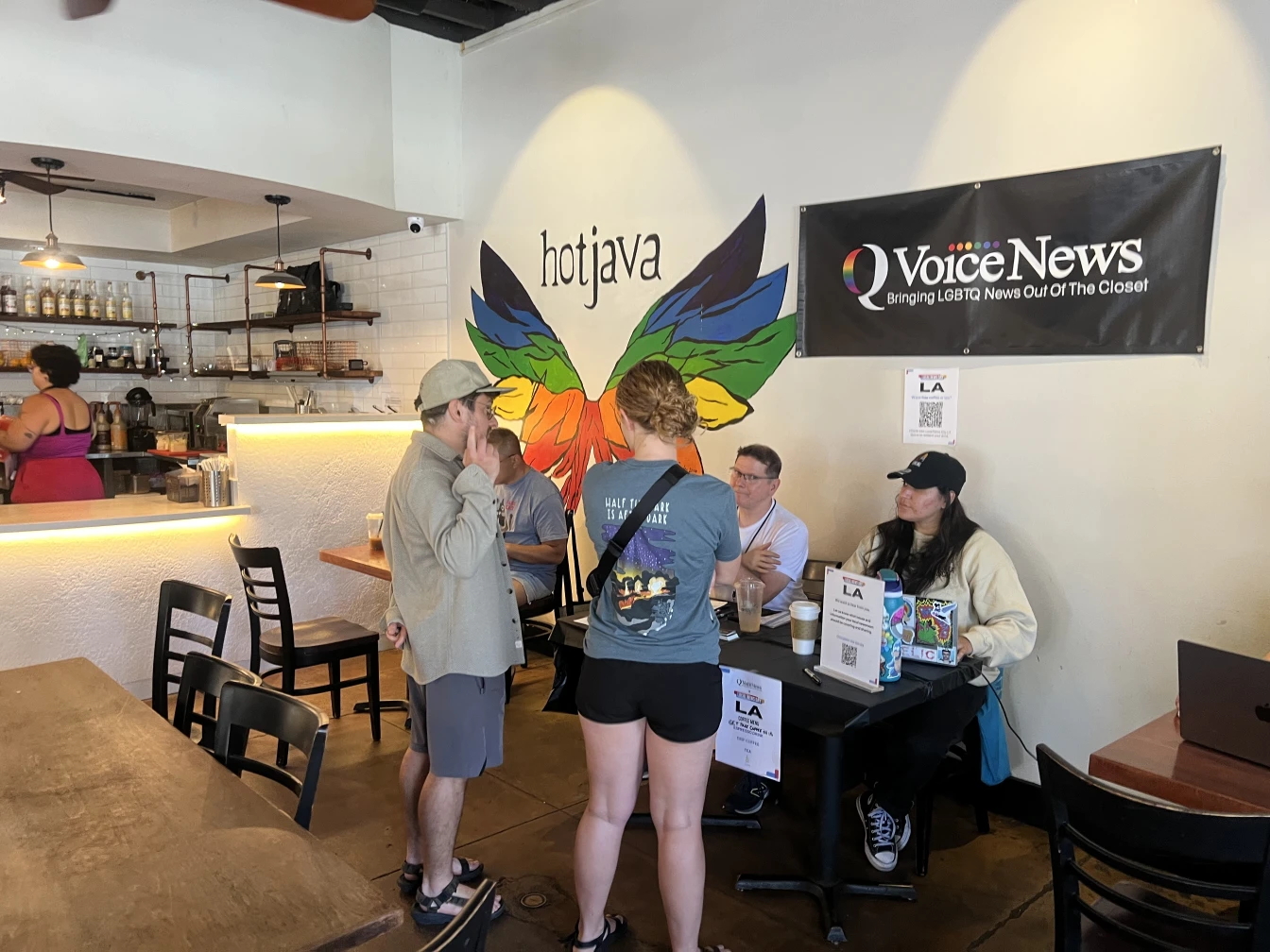
Q Voice News spoke with residents at Hot Java in Long Beach for Local News Day LA.
(
The LA Local
)
Local News Day LA showed that collaboration can strengthen local journalism. In an industry where newsrooms often compete for scoops, audiences and resources, the event demonstrated what’s possible when they work together to listen to communities and better serve residents.
4. Partnerships with local businesses can benefit everyone
While Local News Day LA was primarily about connecting residents with their local news outlet, it was also about supporting and elevating local businesses — each newsroom partnered with coffee shops across L.A. The LA Local supported all media partners with $250 to provide free coffee to residents that came out and connected.
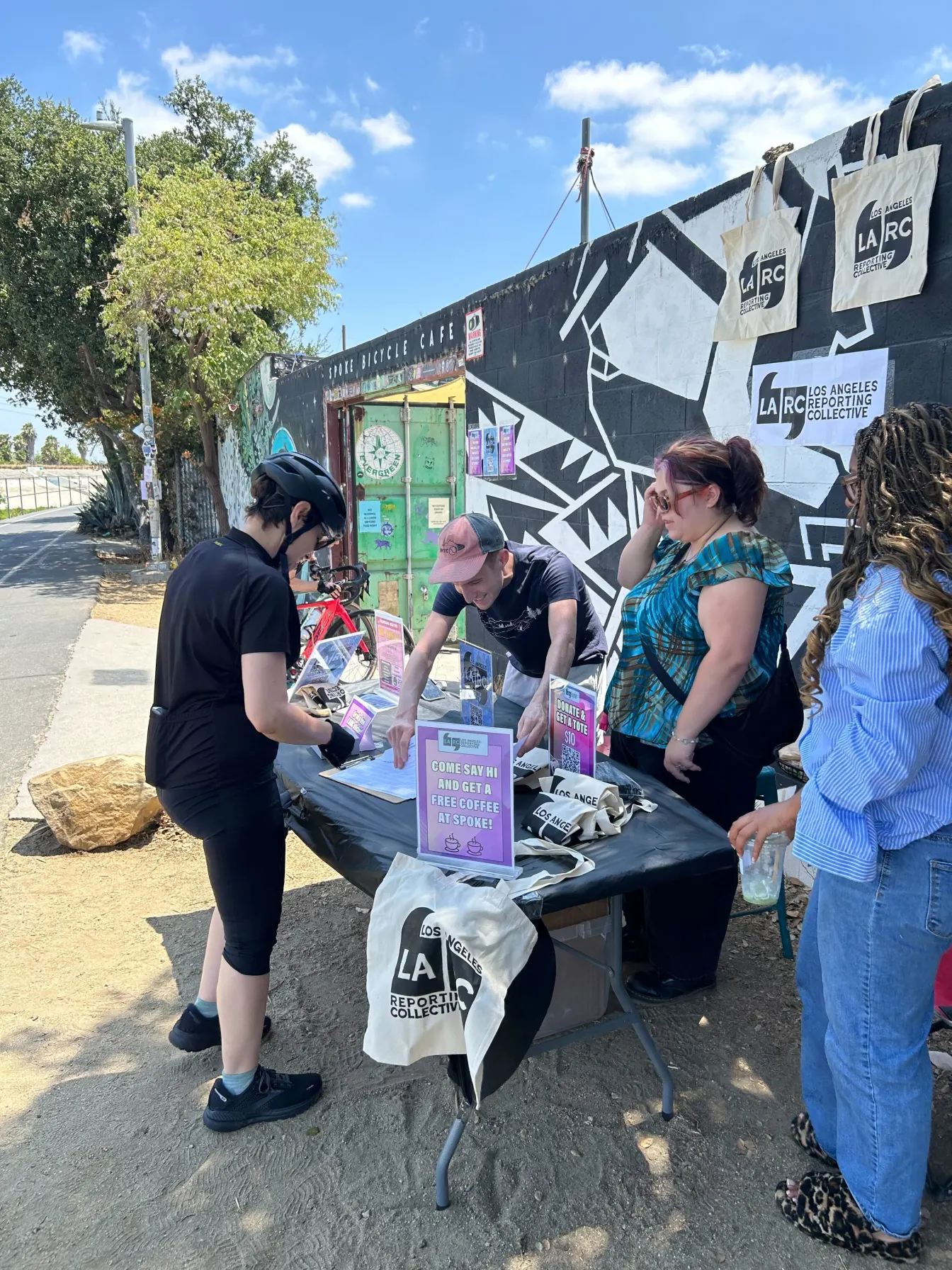
Los Angeles Reporting Collective engaged with community members at Spoke Bicycle Cafe in Frogtown for Local News Day LA.
(
The LA Local
)
Newsrooms got a chance to see the kind of relationships coffee shops already had with people in the neighborhood. LAist journalists learned what a trusted community hub Café Calle was for residents nearby — and we're already making plans to go back. Coffee shops participating in the event also received additional foot traffic while also offering a space for community members to have conversations with journalists and each other.
5. Any newsroom can do this — here’s how
The LAist community engagement team tabled at the Crenshaw Farmers Market on July 11.
(
Sabrina Sanchez
/
LAist
)
An LA Local cafecito event at Asteroid Vinyl.
(
Amir Vera
/
The LA Local
)
If you're at a newsroom that's never done a pop-up community tabling event, you can get started on your own even without a big collaboration. Here's a quick checklist:
Reach out to the local business or program in a specific community you want to engage with.
Clearly outline your goal for tabling. Is it to hear about a specific topic or is it more general?
Promote your event. Talk about it on your social media, newsletters, website and any other format you have to engage with your audience.
Tell community members about your organization! Now is the time to distribute merch or resources you might have. LAist has shared a resource on how to talk to a journalist when at tabling events.
Take notes! You’ll want to reflect on them later.
Have people sign up so you can follow up. Think about a quick check in through a QR code or physical sign-in sheet.
Plan out what is next from what you’ve heard. Reflect on the response and share immediate follow ups for news coverage.
More to consider
Here are other details to get a grasp on before and after your event:
Which days and times have the highest foot traffic? Check with the business or venue you're partnering with. (It might be during the weekend.)
Set your budget if you’re buying participants coffee or any food from the shop, or if you need to order new merch.
Think about naming your event if you plan to do more of them at local shops.
Have an activity in mind so participants feel engaged (e.g. spinning wheel, drawing, coloring, etc.).
Consider your existing relationships with partners you can lean on.
Prepare and discuss with your team! Try a few check-ins ahead of the event and a debrief to discuss what worked.
For more information about how to be a part of LAist’s reporting, visit LAist.com/Community. If you want to read more about The LA Local’s community engagement work, visit TheLALocal.org.
AirTalk host Larry Mantle, left, speaks with a panel of experts to guide us all through the 14 state propositions on the Nov. 3 ballot.
(
James Van Evers for LAist
/
LAist.com
)
Californians will decide on more than a dozen ballot initiatives this November, covering a wide range of proposals focused on housing, taxes, recall elections, voter identification and more. LAist is here to help with our Voter Game Plan and a series of "ballot cram sessions" where we ask the experts for insight and answer your questions. The one thing we don't do? We don't tell you how to vote. That part is up to you.
Read on ... for details about how LAist is helping you get ready for Nov. 3.
Californians will decide on more than a dozen ballot initiatives this November, covering a wide range of proposals focused on housing, taxes, recall elections, voter identification and more.
It’s a lot of information to wade through on your own.
That’s why LAist unveils its Voter Game Plan each election season, with guides to help you cast a ballot that aligns with your values and beliefs. (The one thing we don’t do? Tell you how to vote. That is up to you.) For the Nov. 3 general election, LAist is also hosting a series of ballot cram sessions focused on helping you make informed decisions.
The series kicked off on Wednesday with AirTalk Host Larry Mantle and a panel of experts focused on the long list of statewide propositions in a one-hour cram session.
Michael Alvarez, professor of political and computational social science at CalTech; Sara Sadhwani, associate professor of politics at Pomona College, and Lee E. Ohanian, a professor of economics at UCLA and senior fellow at the Hoover Institution, provided an overview of each ballot measure. The trio described the pros, cons and stakes of every decision Californians face this November, including the confusing and conflicting trio of tax measures you’ll see on your ballot as Props. 40, 41 and 42.
“There’s a lot of uncertainty as to how much revenue this might generate. There’s a lot of uncertainty, in particular, if it’s going to generate revenue in sufficient time to help the Californians who are really in need of having healthcare,” said Alvarez on Prop. 40, which would create a one-time tax on billionaires to fund healthcare.
Lee and Sadhwani both noted that there's a question of whether the tax would drive billionaires out of the state. “If you think that super high wealthy people should be paying more in taxes, there’s better ways to do this,” said Lee.
As for Prop. 41, which would require audits of new tax programs, and Prop. 42, which would ban new taxes on personal property, the panel agreed the measures are confusing.
Both propositions would nullify Prop. 40 if they receive more votes in support than the billionaire tax measure. That’s the big thing to remember, said Sadhwani: “They’re really the poison pills of Prop. 40, the billionaire’s tax. So a yes on 41 or a yes on 42 is a no essentially for Prop. 40.”
“I’ll be honest, Prop. 41 as well as Prop. 42 kind of makes my eyes glaze over,” said Sadhwani. Alvarez added that the measures make his head spin. Experts — they’re just like us!
Lucas Brady Woods
covers the weather and disasters, among other climate and science topics.
Published October 8, 2026 5:18 PM
Officials are urging Southern California residents in flood-prone areas, including in burn scar zones like Altadena (seen in this December 2025 photo), to get sandbags and learn how to use them ahead of El Niño rains.
(
Gina Ferazzi
/
Los Angeles Times via Getty Images
)
Topline:
Peak El Niño season will hit in the next few months, and emergency management officials are urging residents to prepare their homes for possible flooding, mudslides and debris flows.
Know your flood risk: Officials say it’s crucial for residents to understand the flood risks to their property, their neighborhood and the important routes they travel. Know if your property has flooded before and be aware if you’re below a hillside that’s susceptible to landslides or in an area that’s vulnerable to coastal flooding.
Prepare your home: Consider buying flood insurance now if you’re in a high risk zone. Clear out gutters and storm drains. Make sure important documents are in waterproof storage. And think about stockpiling sandbags. But when it comes to sandbags, make sure you know how to properly use them.
Read on … for sandbag tips and our full guide on how to prepare your home for El Niño.
Elevated sea levels are already rolling into Southern California waters, leading to coastal erosion and other damage. An El Niño-driven Kelvin wave is further exacerbating conditions along the coast. And Tropical Storm Rachel could bring rain across the region this weekend.
But all of this is probably just the beginning of a very wet Southern California rainy season.
Authorities have been sounding the alarm.
“ Residents need to hear this information, and they need to hear it repeatedly, enough times so that they too can act,” L.A. County Supervisor Hilda Solis said during a recent presentation about El Niño preparations.
Heavy rain, flooding and debris flows can pose serious threats to homes and infrastructure. Officials and climate scientists say the best way to protect yourself and your property is to make preparations now, well before peak El Niño conditions arrive.
Here’s what you can do to prepare your home.
Preparing your property
One of the first steps to getting your home ready for El Niño is to understand how vulnerable it is to flooding when heavy rain or surging surf hits your neighborhood.
“It really is incumbent upon people to pause, evaluate where they live, where they travel and to really think about what would happen if those areas were flooded out,” said Kerjon Lee, spokesperson for the L.A. County Department of Public Works. “ Knowing your community, your neighborhood, where mud and debris flow might occur — is really critical.”
You can review your risks using California’s MyHazard tool, which allows you to input your address and cycle through potential risks.
Floodwaters and the landscape
Knowing if your property or neighborhood has flooded in the past can be helpful, and you can learn a lot from simply looking at the landscape in and around your home.
If your house is at the bottom of a hillside, for example, it’s probably more susceptible to debris flows, especially if the slope burned in a wildfire in the last several years. Burn scars are especially vulnerable to landslides and flooding because they lack the established vegetation that helps hold soil in place and absorbs water during heavy rain.
Other landmarks to look out for near your property are creeks, canals, drainage channels, debris basins and even low-lying roadways.
It’s also a good idea to understand how rainwater flows onto your property, where it collects and how it leaves. The goal should be for water to flow through your property safely and efficiently, without causing damage to neighbors.
That means clearing debris and overgrowth from gutters and drains now, before extreme weather hits.
Officials are also urging residents to report clogged or blocked storm drains to their local public works department.
If your property is at high risk of flooding, consider stockpiling sandbags. Many fire departments and public works departments offer sandbags to their local communities.
You can check sandbag distribution locations and availability here:
Be prepared to fill the sandbags yourself, as most places only offer empty ones. Never fill sandbags with beach sand or empty used ones onto the beach.
Once you have sandbags, make sure you know how to use them properly.
Here are a few tips:
Only fill sandbags half-full, not all the way full.
Do not place sandbags directly against the outer wall of a building as wet bags can create added pressure on the foundation.
Sandbags should be placed parallel to the direction of water flow.
The open ends of sandbags should be folded underneath and face upstream so they aren’t forced open as water flows around them.
Sandbags should be used to redirect floodwater rather than create a dam or block its path.
Sandbags can be used to protect doorways, but to do so, they should have a waterproof layer like heavy plastic or waterproof canvas placed behind them.
This diagram shows the proper way to place sandbags so that they are parallel to the flow of water or debris and redirect it away from structures.
(
Los Angeles County Department of Public Works
)
Local agencies offer thorough instructions on how to use sandbags online. L.A. County Public Works offers a breakdown in its Homeowners Guide.
Sandbags and other materials for protecting your home, including plywood, lumber or plastic sheeting, should be stored in a dry location away from potential flooding.
More resources
Here are some other helpful resources for preparing your home for possible flooding.
If valuables could be damaged or destroyed by floodwaters, consider moving them away from the ground or, if possible, to upper floors. Keep important documents in waterproof containers or sealed bags, and make sure to create digital copies.
Another recommendation is to check trees on your property for dead branches, cracks or other issues that might make them unstable, especially those that hang over structures. If you’re unsure or concerned about your trees, you can hire an arborist to inspect them. To trim or remove them, you will likely have to hire a professional. Cities and counties generally do not handle tree maintenance on private property.
Standard homeowners insurance policies typically do not cover flood damage, and new flood insurance plans can take at least 30 days to kick in. If you want to consider signing up for a plan, the National Flood Insurance Program is a good place to start.
If floodwaters do enter your home, public health officials recommend drying wet areas as quickly as possible, as saturation can lead to mold. If mold does take hold, clean the area using a disinfectant. Also, wear gloves and a mask to protect your skin and lungs and throw away moldy items that can’t be cleaned.
Keep up with LAist.
If you're enjoying this article, you'll love our daily newsletter, The LA Report. Each weekday, catch up on the 5 most pressing stories to start your morning in 3 minutes or less.
Erin Stone
covers climate and environmental issues in Southern California.
Published October 8, 2026 4:00 PM
Sara Marti, Dan Godoy, Jordan Corral and Los Angeles Regional Fire Safety Council volunteers Bernice and Karen with seven bags of castor bean seed clusters they removed from Temescal Canyon Gateway Park.
(
Courtesy Sara G. Marti
)
Topline:
A small group of volunteers is working to remove invasive plants in Temescal Canyon Gateway Park in the Pacific Palisades.
Why it matters: Invasive plants such as castor bean and black mustard can outcompete natives after a fire and lead to dry vegetation that makes future fires worse.
Read on ... for more on the small but mighty volunteer effort in the Palisades, and how you can help.
Jordan Corral had to do something.
It was late 2024, during a historically dry start to the winter. But the winter before that had been historically wet. This kind of “weather whiplash” is growing more common with a warming climate, research is finding. And it meant the hillsides of the Santa Monica Mountains were overgrown with invasive and highly flammable plants, such as black mustard, castor bean and fennel.
So Corral got to work. Alongside mentor Bill Neill, the president of the Santa Monica Mountains chapter of the California Native Plant Society, Corral pulled together a group of volunteers to pull out invasive plants.
Then came the Palisades Fire. Corral and his wife, Sara Marti, lost their apartment and had to start over. They’ve finally relocated to an apartment that survived the fire. Meanwhile, through their work for the nonprofit Resilient Palisades, Corral has launched a subgroup focused on invasive plant removal.
“The team is working on wildfire recovery while trying to mitigate the next wildfire simultaneously,” Marti said by phone on a day when Corral was out working with volunteers in Temescal Canyon Gateway Park.
Now, Marti said, their effort to heal the land has become a part of their own recovery journey.
How to help
You can learn more about the invasive plant removal effort here and sign up to volunteer here. The group is looking for volunteers Tuesdays, Thursdays and weekends from 10 a.m. to noon.
You can also find the latest updates on the group’s Instagram @removal_of_invasive_plants.
“Being a part of the recovery has played an enormous part of personal healing,” she said. “It's meditative while you know that you're also making a huge difference, protecting the nearby neighborhoods.”
A half dozen or so volunteers, including Corral and Marti, have been regularly going to the park to remove invasive species, which choke out native plants and grow into dense, dry vegetation that can make fires more intense. They’ve also worked with local high schools and youth groups.
Now, they’re racing to get as many invasive species removed as possible, while at the same time planting as many native seeds as they can, ahead of a potentially very wet winter driven by El Niño. If the rain is as intense as forecasters are predicting, it could help invasive species flourish further.
Sara G. Marti, left, and Jordan Corral lost their apartment in the Palisades Fire and are leaders in the nonprofit group Resilient Palisades.
(
Courtesy Sara G. Marti
)
The effort has been boosted by a recent $24,000 grant from UCLA’s Philanthropy as Civic Engagement Course. The money will help hire expert field assistants and buy safety gear, among other things. Corral and Marti hope the effort can become sustained.
“It's not a one-and-done thing,” Marti said. “Invasive plants are going to continue coming back. … So we're really just trying to stay ahead of it as much as we can.”
In some ways, Marti said, the effort reflects their own journey to recover after losing their apartment in the fire.
“ We're probably never going to win, but we can't give up,” she said. “We have to keep trying.”
Cyclists ride across the Sixth Street Bridge in Los Angeles in 2022.
(
Trevor Stamp
/
LAist
)
Topline:
The city of Los Angeles will establish a fund to clean the 6th Street Bridge, where trash and other waste often pile up on pedestrian walkways.
Why now: In a unanimous vote on Tuesday, the City Council approved the establishment of the fund, which will allow the city to accept and retain donations from private entities “to preserve this iconic landmark,” Councilmember Ysabel Jurado said.
The context: The dedicated fund follows the city’s hiring of Pasadena-based engineering firm Tetra Tech to restore the lighting of the bridge, which has been plagued by copper wire theft since its opening in 2022. The outages have frustrated residents and commuters who use the bridge to walk, run, bike and drive between downtown L.A. and the Eastside.
The backstory: Funds will go toward trash and bulky item pickup, graffiti abatement and other beautification services for the bridge.
The city of Los Angeles will establish a fund to clean the 6th Street Bridge, where trash and other waste often pile up on pedestrian walkways.
In a unanimous vote on Tuesday, the City Council approved the establishment of the fund, which will allow the city to accept and retain donations from private entities “to preserve this iconic landmark,” Councilmember Ysabel Jurado said. “Our commitment to this bridge has to ensure its longevity.”
Funds will go toward trash and bulky item pickup, graffiti abatement and other beautification services for the bridge.
The dedicated fund follows the city’s hiring of Pasadena-based engineering firm Tetra Tech to restore the lighting of the bridge, which has been plagued by copper wire theft since its opening in 2022.
The outages have frustrated residents and commuters who use the bridge to walk, run, bike and drive between downtown L.A. and the Eastside.
This move also comes as residents in Boyle Heights and the Arts District grapple with how the 12-acre park beneath the bridge will be maintained once it opens in 2027.
Community members have raised concerns about the possibility of homeless encampments forming at the park, as well as graffiti and whether copper wire theft from the bridge could affect the park’s safety.
Meanwhile, groups like the Arts District Little Tokyo Neighborhood Council, Arts District Los Angeles and the Boyle Heights 5K Run/Walk are filling gaps with an upcoming bridge cleanup in collaboration with Jurado’s office.