




One year ago, Congress defunded public media. Now that we're 100% community funded, please become a sustaining member or increase your existing membership today.
Why a gay California senator is annoyed by his own LGBTQ health info bill

Demonstrators in favor of LGBT rights rally outside the Supreme Court in Washington, DC, in 2019.
(
Saul Loeb
/
AFP via Getty Images
)
State Sen. Scott Wiener has introduced 52 bills this session, but he’s annoyed that he had to author one in particular.
“I’m gonna be honest that it’s frustrating that I had to bring this bill,” he told the Assembly Public Health Committee this week. “I should not have had to bring it.”
The legislation that irks the San Francisco Democrat is his Senate Bill 957, which would force California’s health officials to do what Wiener says they should have been doing anyway: provide a place on health care forms for people who identify as LGBTQ to voluntarily note their gender identity and sexual orientation.
For years, other Californians have been asked to voluntarily declare their race, age and whether they’re a man or a woman on various health care forms, providing researchers with important demographic data that helps inform treatments and responses to public health crises, Wiener said.
“If we’ll recall back to the beginning of the pandemic, when we realized that older people were much more likely to die from COVID and when we realized that there were much higher rates of infection and death in Black and brown communities, the only reason we knew that was because we had demographic data,” Wiener told the health committee. “Because when people would go seek health services, they were asked demographic questions.”
But Wiener, who is gay, said there’s not much data available for researchers when it comes to folks like him or lesbian, bisexual, trans and queer Californians. A big reason: state law, he said, gives health officials the option to place LGBTQ demographic questions on state and local health forms.
Sponsored message
Wiener’s bill would require it.
He said it would close a loophole that he describes as “a massive blind spot in the system” – and one cited in a state auditor’s report last year. The report found that almost all of the dozens of state and local health care forms auditors examined were missing LGBTQ demographic questions. The audit noted that the California Department of Public Health has a new disease surveillance and reporting system scheduled to go live next year that would improve reporting.
Local health officials, however, told auditors they needed state guidance about what data to collect, something Wiener’s bill seeks to address by requiring them to collect sexual orientation, gender identity and intersexuality data “on any forms or electronic data systems, unless prohibited by federal or state law,” according to the bill’s analysis. State health officials would also have to provide a public report to the Legislature detailing their progress.
The bill’s sponsors include Equality California, California LGBTQ Health & Human Services Network, and the San Francisco AIDS Foundation. Members of the California Legislative LGBTQ Caucus are co-sponsors.
So far, only Republicans have voted against Wiener’s bill, which passed the Assembly health committee this week after advancing through the Senate this spring.
But Assemblymember Marie Waldron, a Republican from San Diego, wasn’t one of them. The former Assembly Republican leader told her colleagues on the health committee that the data collected could save lives.
“The more data available to health providers, I feel, the better,” she said. “We’re always talking about data-driven care and personalized medicine, and we can’t do it without the data.”
Sponsored message
Trending on LAist
-
 Under state law, rent hikes can be as high as 8.7% starting in August. Here’s what SoCal renters need to know.
 -
 A new California Supreme Court ruling upholds limits on how many vacation hours government workers can cash out and apply toward the pension formulas.
 -
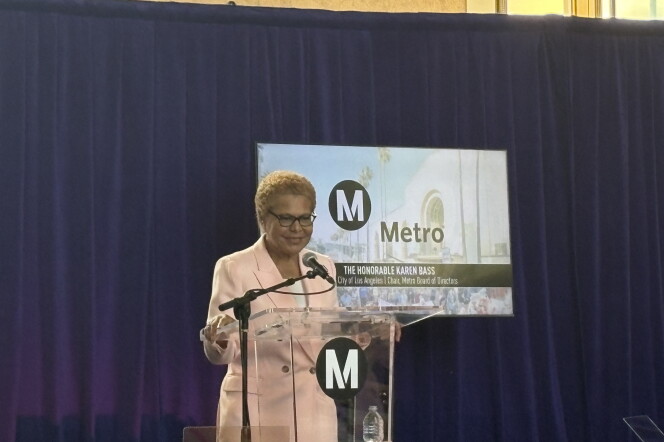 LA Mayor Bass previews ‘fare-free’ system as she takes the Metro Board chair gavel for a second timeAt the annual Metro State of the Agency event, Bass named system safety, affordability and reliability as her main priorities.
 -
 The city of L.A. has scheduled a hearing to gather testimony from residents and consider revoking an oil company’s permit to operate a facility in Jefferson Park.
 -
 Tickets from the Sept. 22 grand opening through the end of next February were up for grabs as of Tuesday.
 -
 Populations of two disease-carrying mosquito species are concerning public health officials, who are employing new strategies to reduce their populations.


Best of LAist


