




One year ago, Congress defunded public media. Now that we're 100% community funded, please become a sustaining member or increase your existing membership today.
How Long Before California’s Campaign Finance Website Is Replaced?

The Assembly floor at the state Capitol on May 31, 2022.
(
Miguel Gutierrez Jr.
/
CalMatters
)
When will Cal-Access — the antiquated web portal to track California’s campaign money and lobbying — finally be replaced?
The short answer: Probably not before December 2026. That’s after the next statewide election, when reporters and the public most need the data.
Secretary of State Shirley Weber’s office is currently evaluating bids and says it expects to have a primary vendor on board by this summer, according to its update Tuesday to the Assembly Budget Subcommittee on State Administration.
An independent assessment commissioned by Weber’s office and the California Department of Technology estimates the project could take 27 months, but the actual timeline depends on the vendor, John Heinlein, assistant project director, told the committee.
Cal-Access is the system where campaign and lobbying disclosures required by state law are uploaded. It’s the main way for the public to keep track of how much campaign money candidates and ballot measure campaigns are raising, and who the donors are, as well as how much lobbyists are spending and who is hiring them.
But to the frustration of many, the site experiences frequent outages, sometimes for hours at a time.
Sponsored message
Asked whether it tracks outages, the Secretary of State’s office said via email that it has implemented a “stabilization” project and hasn’t seen significant outages this year.
The replacement project aims to make the system more reliable, user-friendly and allow for better transparency, according to the Secretary of State’s website.
Weber’s office is seeking an additional $16.8 million in the 2024-25 budget to develop the initial plans and project structure, on top of existing funding of $5.4 million.
The new and improved Cal-Access is already at least three years overdue.
The project was initiated in 2016, under then-Secretary of State Alex Padilla, who is now a U.S. senator. After multiple delays, the new system was scheduled to roll out in June 2021, but was paused by Weber due to shortcomings of the replacement system that an independent assessment described as “flawed at the architecture, data structure, middle-tier, and user presentation layers.” Based on that assessment, Weber’s office opted to restart the process.
The state has allocated about $70 million to the project to date, and spent at least $40 million as of September 2022.
Trending on LAist
-
 Superior Court judges oversee courtroom proceedings and trials across all of Los Angeles County.
 -
 City Councilmember Nithya Raman said Israel is committing genocide in Gaza while Bass said the term does not apply.
 -
 California governor rejects legislation sponsored by LA fire victims, who had spoken out against his wildfire-liability effort.
 -
 The unusual delivery method — and the homemade bagels — come from transplant Richard Lee.
 -
 The opening of the long-awaited LAX People Mover train is getting pushed back, again.
 -
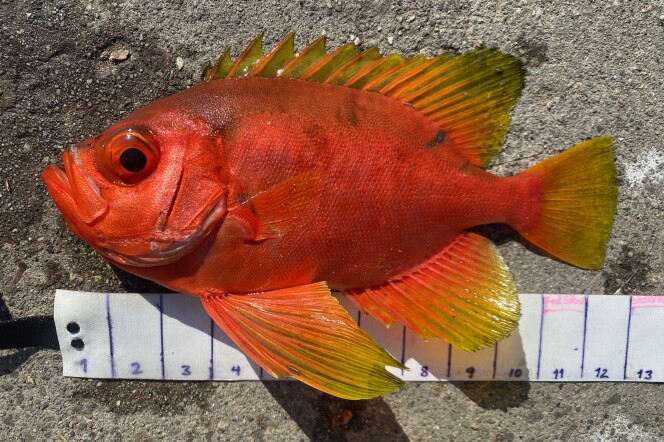 The creatures are here because of warm waters associated with El Niño, but the climate system could also threaten native species that aren’t used to the heat.


Best of LAist


