




One year ago, Congress defunded public media. Now that we're 100% community funded, please become a sustaining member or increase your existing membership today.
California New Laws For 2024: Employees Get Protection For Using Cannabis

Cannabis products on display at A Therapeutic Alternative in Sacramento on July 19, 2023.
(
Miguel Gutierrez Jr.
/
CalMatters
)
Starting in the new year, California employers will be barred from asking workers about their use of cannabis outside of work, and from discriminating against them because of it.
Two bills signed by Gov. Gavin Newsom in the past couple of years aim to strengthen the state’s legal cannabis industry by updating outdated laws. Assembly Bill 2188, which Newsom signed in 2022, will prohibit employers from using the results of hair or urine tests for marijuana — which can detect traces of cannabis for days or weeks — in their decisions to hire, fire or penalize workers.
When the governor signed AB 2188 along with other cannabis-related bills in 2022, he said in a press release that “rigid bureaucracy and federal prohibition continue to pose challenges to the industry and consumers.”
SB 700, which Newsom signed this year, clarifies AB 2188 by amending the state’s Fair Employment and Housing Act to bar employers from asking job applicants about their prior use of cannabis.
California NORML, a nonprofit organization that advocates for consumer rights related to cannabis, sponsored AB 2188. In its argument supporting the bill, the organization said hair or urine testing for marijuana does not detect actual impairment, a fact the federal government has acknowledged. “Studies indicate that metabolite tests for past use of marijuana are useless in protecting job safety,” the group said.
The exceptions under the AB 2188 would be for workers in the building and construction industry and for job applicants and employees in positions that require a federal background investigation or clearance.
Sponsored message
The National Federation of Independent Business lists the new laws among the top five “compliance headaches” for California’s small business owners in 2024. California Chamber of Commerce opposed AB 2188, though it removed its “job killer” label after some revisions, saying before the bill was signed that employers risk liability when they “take legitimate disciplinary measures” against employees. “Employers must be able to keep their workplace safe by disciplining employees who arrive at work impaired,” the group said.
But AB 2188 does not prevent employers from using other tests to detect impairment, such as blood tests.
SB 700 accounts for employers’ rights to ask about an applicant’s criminal history, but the employer may not discriminate against an applicant when it finds information about past use of cannabis related to criminal history unless otherwise permitted by law.
In 2016, California became the first state to legalize marijuana for medicinal purposes, and the state’s voters legalized its recreational use in 2016. Recreational use of marijuana is now legal in 24 states and Washington, D.C.
Trending on LAist
-
 In her first public statements since controversy erupted over millions of unaccounted for tax dollars, Rhiannon Do says she’s no longer with the O.C. nonprofit Viet America Society. She also says she never had a leadership role. Public documents show otherwise.
 -
 After San Gabriel's city council rejected the proposal as "too narrow", one city councilmember argued the entire DEI commission, created in the aftermath of George Floyd's murder, had "run its course."
 -
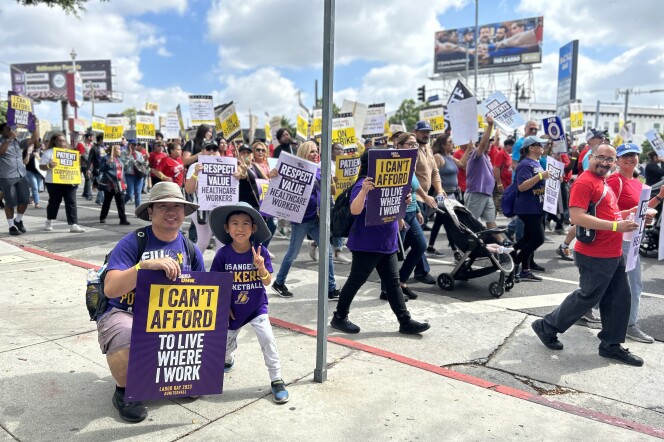 A medical industry challenge to a $25 minimum wage ordinance in one Southern California city suggests health workers statewide could face layoffs and reductions in hours and benefits under a state law set to begin phasing in in June. Some experts are skeptical, however, that it will have such effects.
 -
 “It was a downer,” said Agustin Ruelas, the co-owner at Brewjeria, the Latino and POC-owned craft brewery in Pico Rivera. “We just wanted to honor Selena.”
 -
 Sandhill cranes are returning to the Lake Tahoe basin after a century long hiatus in what many say is a conservation success story.
 -
 The Dodgers fired Mizuhara in March after Ohtani's lawyers accused him of stealing millions of dollars from the baseball player to place bets with an Orange County-based bookie.


Best of LAist


