




One year ago, Congress defunded public media. Now that we're 100% community funded, please become a sustaining member or increase your existing membership today.
Malaysian cuisine is ready for its close-up with Rasarumah in Historic Filipinotown


Malaysian and Southeast Asian offerings from Rasarumah in Historic Filipinotown from Chef Johnny Lee.
(
Johnny Lee
/
Courtesy Rasarumah
)
Rasarumah is a new restaurant from chef Johnny Lee (formerly of Pearl River Deli) and Last World Hospitality (Barra Santos and Found Oyster), specializing in Malaysian and Southeast Asian cuisine. Its aim: to bring Malaysian food into mainstream Los Angeles cuisine.
Lee, who was born in China but grew up in Lincoln Heights, is considered one of the premier Asian chefs in Los Angeles. Over the years, he has steadily built a name with his casual yet inventive and meticulous interpretations of classic Cantonese dishes.
The backstory
Lee’s earlier restaurant, Pearl River Deli in Chinatown, had lines out the door for its classic Cantonese dishes, including Hainan chicken and char sui pork. However, when it closed earlier this year, Lee felt burned out by the food industry and was not looking for another venture.
”If I had not done this restaurant with Last Word, I don't think I would have done another restaurant,” Lee said.
-
 “This is me on a plate” says the SoCal pop-up chef.
 -
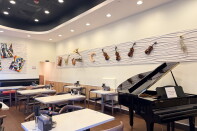 A pair of former piano teachers offers Lanzhou beef noodles and classical music at Chopin Noodle House.
 -
 The property owner has floated preliminary plans to replace Mel’s Drive-In with apartments. Preservationists want it landmarked.


Rasarumah dining room
(
Johnny Lee
/
Courtesy Rasarumah
)
Sponsored message
Two years ago, Last Word had approached Lee about developing a concept together. When they found a cozy space in Historic Filipinotown and promised him creative control, as well as support, he was in.
After closing Pearl River Deli, Lee went down the rabbit hole researching cuisines from the Chinese diaspora, specifically the immigration patterns of Hainanese and Teochew people from China to Southeast Asia.
“Food changes over time with immigration," Lee said. "Geography is one thing, but national borders are just an artificial construct. Chinese people exist everywhere."
He decided to focus on Malaysian cuisine. While there are plenty of Malaysian restaurants in the region, such as Ipoh Kopitiam and Borneo Eatery in the San Gabriel Valley, they remain very much family-owned independent spots. With Rasarumah, Lee is poised to create something similar to what Pine & Crane did with Taiwanese cuisine, providing a path for Malaysian food to take its place in L.A's culinary food scene.
The cuisine
Focusing on Malaysia's food has given Lee a wide range of food influences to play with. Its cuisine reflects its multi-cultural background, an amalgam of Indigenous populations, diasporic communities from China and India, and colonial influences from Portugal, Holland, and Britain.

Hokkiwn mee served Singaporean style with thick egg noodles and rice vermicelli cooked in pork and shrimp stock, topped with roasted pork jowl, seared squid, and lardon.
(
Johnny Lee
/
Courtesy Rasarumah
)
Sponsored message
The most well-known dish is probably Hainan chicken, poached chicken over rice, whose influence extends beyond the Chinese border to other Southeast Asian countries like Malaysia, and Singapore, where it's now the national dish.
It has a certain amount of cultural cache for Lee, who has been cooking it regularly for the past decade throughout Los Angeles. Using the dish as a lens allowed him to unlock the possibilities within different regional cuisine styles.

Wagyu Beef Cheek Rendang served with rotis.
(
Johnny Lee
/
Courtesy Rasarumah
)

Rasarumah's interior is modeled after cafes in Penang, Malaysia, down to the linoleum-checkered floors.
(
Johnny Lee
/
Courtesy Rasarumah
)
The menu
“Rasarumah” means “flavor house” in Malay, a promise undoubtedly delivered. Casual bites can be enjoyed table side or at the stainless steel bar, which includes a selection of satay skewers with a choice of chicken thighs and pork jowl ($12-$21).
There’s also an all-vegetable selection of cold items on the menu, including the ulam bendi ($16), whole blanched okra on thick wedges of eggplant topped with sour sambal and dried shrimp. It resembles an abstract piece of art, matched by its clean yet pungent flavors.
Other items include char koay kak ($20), a griddled cubed rice cake dish mixed with egg, and preserved daikon radish. My favorite was the Hokkien mee ($30), which contained round egg noodles and rice vermicelli cooked in pork and shrimp stock, served with a light helping of pork and sautéed squid. I was already a fan of the dish, but after trying Lee’s take, I feel like a zealot.
Sponsored message

Ulam Bendi, a cold vegetable dish blanched okra & eggplant, sour sambal, dried shrimp
(
Johnny Lee
/
Courtesy Rasarumah
)
If you want to go all out, try the rendang made with slow-cooked wagyu beef cheek ($44). It is served in a curry-meets-demi-glace sauce, coconut milk, and other aromatics, including lemongrass, garlic, ginger, and galangal. Pickled vegetables and soft, flaky rotis accompany it, allowing you to taco it all together, as I did.
The location
The space has enough seats for around 40 people and is housed in a 1920s building on Beverly Boulevard that once served as the bottom floor of a brassiere factory. The cozy interior shimmers with a modern aesthetic modeled after cafes in Penang. It features linoleum checkered floors, exposed brick, and cozy banquettes that line the restaurant against walls painted a warm, subtly hued pale straw color with Roman Clay treatment adorned with Lee’s photography from his travels. The space feels like sitting inside a modern version of a Rousseau painting.
The low lighting is accompanied by a large illuminated letterbox sign over the bar that changes regularly, welcoming you in Malay and English as you enjoy your meal.

Senior Vice President News, Editor in Chief


