




One year ago, Congress defunded public media. Now that we're 100% community funded, please become a sustaining member or increase your existing membership today.
LA's most personal paella lives at this Los Feliz restaurant


A finished pan of Chef Joshua Whigham's paella at Casa Leo's monthly Paella Drop, ready to be served to guests.
(
Courtesy Casa Leo
)
Casa Leo is a small Spanish restaurant located in Los Feliz near Griffith Park, where Chef Joshua Whigham is quietly bringing his own fresh approach to Spanish cooking — one that's specific and ingredient-driven in a way you'd be hard-pressed to find anywhere else in the city.
Whigham spent 15 years working under José Andrés — the Michelin-starred, James Beard Award-winning Spanish chef — before striking out on his own a little over a year ago with Casa Leo. The restaurant has already been added to the Michelin Guide California and has built a reputation for a seasonal, genuine, personal approach. That shows up across the menu, from cocas (Iberian flatbreads) to a trout en escabeche dish inspired by Martín Berasategui, the Basque chef often credited as a pioneer of modern Spanish cuisine.
-
 “This is me on a plate” says the SoCal pop-up chef.
 -
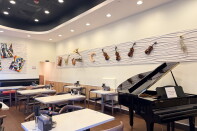 A pair of former piano teachers offers Lanzhou beef noodles and classical music at Chopin Noodle House.
 -
 The property owner has floated preliminary plans to replace Mel’s Drive-In with apartments. Preservationists want it landmarked.


Paella drop
One Sunday each month, Whigham hosts a "paella drop," cooking the paella outside the restaurant on a propane rig built to fit the giant pan he uses. Originally open to just 20 guests, the pop-up has grown in popularity as word has spread — Whigham has incrementally raised the cap over time, and now cooks with an even larger pan that can accommodate up to 70 guests.
It’s a setup that gets a lot of attention. He recalls a group of cyclists zipping by one day, with one of them yelling, "Holy shit, that smells good."

Chef Joshua Whigham stands beside the finished paella, cooked on a custom propane rig large enough to hold his oversized pan.
(
Courtesy CASA LEO
)
Sponsored message
"Paella is Spain's national dish," Whigham says — and for many Americans, it's the only regional dish they know by name. Most Americans picture one version of paella — chicken, shrimp, saffron-yellow rice — but the dish looks different depending on where in Spain you are. While the dish has roots in the southeastern region of Valencia, its ingredients and preparation vary widely throughout the country.
Showcasing that variety is one of Whigham’s aims. And he does it with strict adherence to tradition — he'll never include chorizo, since its heavy smoke and paprika flavors, he says, completely overpower the subtle, delicate taste of the saffron, broth and rice.
In August, the paella included market mushrooms, summer truffle, chicken and langoustine.
The next drop, on Sept. 20 (which just so happens to be World Paella Day), is a cuttlefish (sepia) paella.
Whigham wanted the drops to serve as an opportunity to activate the space in ways beyond regular brunch and dinner service.
Not a tourist menu
Whigham says people's exposure to Spanish cuisine often stops at gazpacho, jamón, and that one paella experience they had while studying abroad in college.
Sponsored message
His approach, honed over almost two decades of cooking Spanish food, involves first surveying a dish's regional origins and then adapting it using Southern California ingredients, in a process Whigham calls "giving a traditional dish a sense of place."
"That's the path I'm on — taking traditional dishes and making them ours,” he adds.

A plated portion of Casa Leo's paella, served with a side of aioli and topped with edible flowers and microgreens.
(
Casa Leo
)
For example: marmitako, a humble Basque fisherman's dish traditionally made with tuna and potato, with a base consisting of tomato, bell pepper, red onion and fish stock. Whigham noticed poblano peppers were "exploding at the market" and swapped them in for the green bell peppers, using the same process and proportions — resulting in a richer tone, more of a capsicum flavor and a "nice low-key heat." Paired with the chili de árbol spice, it made the dish "warmer and richer and a little deeper in flavor."
Less than two years in, Whigham says the Michelin recognition was a lovely surprise. "We weren't looking for it," he says. "This is what I do. I don't know how to do anything else but this."
Still, he feels the weight of its importance: "A good restaurant, you feel it — the pulse of it, the heartbeat. That's what I want for people."
Casa Leo
Location: 4500 Los Feliz Blvd., Suite C, Los Angeles
Hours: Dinner: Sunday–Thursday, 5:30–9:30 p.m.; Friday–Saturday, 5:30–10:30 p.m. Closed Tuesdays.
Booking: Reserve via Resy; follow @casaleo.la for future paella drop dates.

Senior Vice President News, Editor in Chief


