




One year ago, Congress defunded public media. Now that we're 100% community funded, please become a sustaining member or increase your existing membership today.
A CHP officer thought a stroke victim was on drugs. Years later, his family gets permission to sue

(
Chris Yarzab
/
LAist Featured Photos pool on Flickr
)
Six years ago, a federal judge decided that a California Highway Patrol officer was protected from a civil lawsuit filed by the estate of a man involved in a one-car accident on a Costa Mesa freeway on-ramp.
The Highway Patrol officer, Samantha Diaz-Durazo, did not call an ambulance. Instead, she observed the man for 45 minutes after she arrived on the scene, then arrested him on suspicion that he was on drugs — he had actually suffered a stroke. He wouldn’t get to the hospital until hours later.
On Wednesday, a three-judge panel on the 9th U.S. Circuit Court of Appeals reversed the lower court’s dismissal and said the estate of Steven D’Braunstein could indeed sue Diaz-Durazo and the California Highway Patrol.
The original judge in the case decided that Diaz-Durazo’s actions were protected by the legal concept of qualified immunity, which shields law enforcement officers from legal liability except in cases where they violated someone’s constitutional rights or acted unlawfully.
-
 The tour-bus-sized telescope aims to unravel cosmic mysteries and identify more than 100,000 planets beyond our solar system.
 -
 Gov. Gavin Newsom backed off his plans to ease costs for utilities following wildfires they cause, striking a narrower deal with Democratic lawmakers.
 -
 The company now has seven days to complete cleanup, including removing debris and disinfecting certain areas.


The appeals court disagreed. It found if the officer indeed made an unreasonable mistake, “Durazo’s failure to summon prompt medical care was a violation of clearly established law, disentitling her to qualified immunity.
“A reasonable jury could find that Officer Durazo violated D’Braunstein’s constitutional rights by failing to summon him prompt medical care, considering the serious nature of the collision and his evident symptoms of distress,” wrote Judge Daniel Bress, who wrote the 9th Circuit opinion. “We further hold that a jury could find that Durazo’s apparent belief that D’Braunstein was not in need of medical attention was based on an unreasonable mistake of fact or judgment.”
Sponsored message
Judge Kenneth Lee dissented from the ruling, writing that, while tragic, “there was no clearly established law requiring an officer to distinguish between symptoms and then call for emergency medical assistance when there are no obvious signs of a major physical injury.”
Under Fourth Amendment case law, police are required to provide “reasonable post-arrest medical care,” according to the appellate court decision.
Though he had no alcohol in his blood and no evidence of drug use in the car, Diaz-Durazo took D’Braunstein to the Orange County Jail, where a nurse took his blood pressure but refused to admit him, saying he needed emergency care.
Two hours passed. Then Diaz-Durazo took D’Braunstein to a local hospital, where he was admitted three and a half hours after Diaz-Durazo found him at the scene of the crash.
D’Braunstein alleges that the delay caused brain damage — he is now in a long-term residential care facility and is unable to care for himself. If he had been able to get an intravenous treatment soon after the stroke, he alleges that the damage would have been mitigated.
Officer Diaz-Durazo, who is being defended by the Highway Patrol and state attorneys, contends that the stroke symptoms started the night before the crash, and treatment would not have helped by the time she encountered him.
Bress in the new ruling wrote, “The reason for the crash did not change the need for emergency medical evaluation. We therefore hold that a jury could find that Officer Durazo did not provide D’Braunstein with objectively reasonable medical care when she did not attempt to arrange any treatment for hours after D’Braunstein was involved in a serious vehicle accident and showed signs of distress.”
Sponsored message
The case was sent back down to federal district court.
Trending on LAist
-
 The latest numbers were a blow to an incumbent mayor who put homelessness at the top of her agenda.
 -
 From Persian saffron pistachio to vegan Indonesian-inspired flavors, here's where LAist listeners are getting their sweet cool treats.
 -
 Extreme heat warnings are in effect throughout Southern California. And experts continue to warn about fire weather and beach hazards.
 -
 The first phase of LAUSD’s screentime limits starts in August.
 -
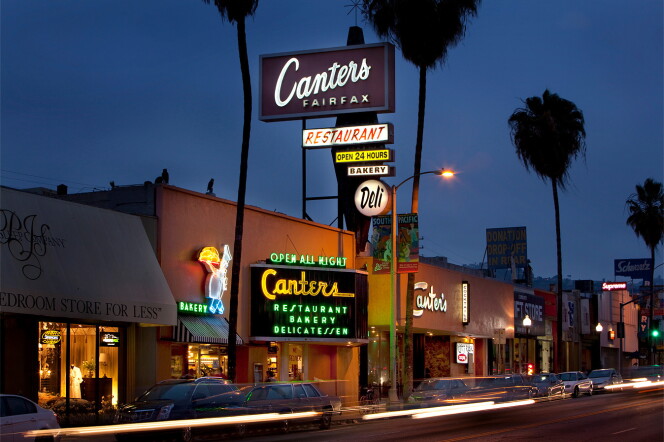 Nearly a century in, the Fairfax institution is still going strong — feeding Canter's original patrons’ grandkids and their grandkids.
 -
 A confluence of weather patterns here at home and across the Pacific Ocean is funneling sticky air to Southern California.


Best of LAist


