




One year ago, Congress defunded public media. Now that we're 100% community funded, please become a sustaining member or increase your existing membership today.
Technically, California won’t delay an oil well protection law — but Newsom axes funding to enforce it

An active oil derrick near homes in the city of Signal Hill in Los Angeles County on Oct. 19, 2022.
(
Pablo Unzueta
/
CalMatters
)
Gavin Newsom’s late session proposal to extend deadlines — by more than four years in one case — for oil companies to comply with a new law fizzled and died late this week.
But environmental groups didn’t have a chance to cheer a rare victory over California’s fossil fuel interests: When the governor’s administration withdrew the proposal, it also eliminated from the budget bill any funding to implement the 2022 law — a law that prohibits new oil operations within 3,200 feet of homes and schools and calls for a robust monitoring system to track leaks and air and water quality.
State agencies maintained that the deadlines for implementing many of the law’s requirements were never practical and did not allow sufficient time to hire staff to oversee a new state program, or to understand and put in place the complex monitoring and testing regimes to ensure public health.
While some of the law’s elements are already in place — no new oil or gas wells are now permitted within the buffer zone, for example — leak detection protocols and other critical monitoring elements have yet to be determined.
Environmental groups say there’s an inherent contradiction to the governor’s actions. Officials needed more time to prepare and put in place a suite of sophisticated regulations that were new to them. But, by holding back the funding that would have allowed regulators to hire staff and build expertise, it makes it more difficult for agencies to carry out the law, ensuring more delays.
The original law’s author, Lena A. Gonzalez, a Democrat from Long Beach, has expressed frustration at the delay and the toll it will take on communities affected by California oil wells, noting that if state agencies are understaffed, there’s been “plenty of time to figure this out.”
At the end of this week, she struck a cautiously optimistic tone. “As negotiations continue, I remain hopeful that we can reach an agreement that won’t delay the critical protections our communities have fought so hard to achieve,” she said in a statement. “This is a pivotal opportunity to protect our progress — there’s no time to move backward.”
Some 2.5 million Californians, mostly those in low-income communities of color, live within 3,200 feet of an oil or gas well. And those wells are risky neighbors: Research has linked their proximity to a higher incidence of premature and low birthweight babies.
Sponsored message
Trending on LAist
-
 Federal changes starting in 2027 could impact 1 million L.A. County enrollees.
 -
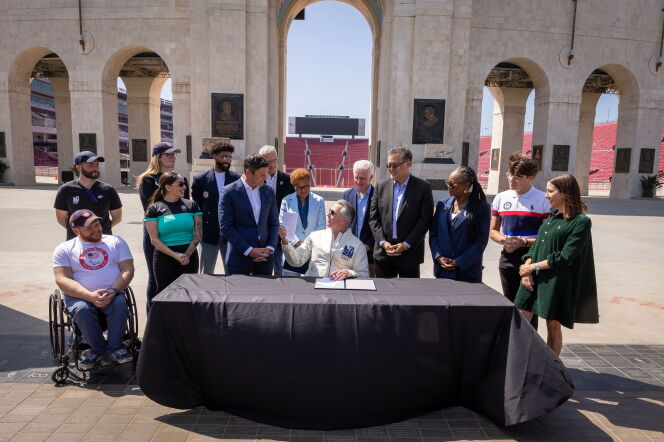 Gov. Gavin Newsom signed a bill directing the state to negotiate contracts with law enforcement agencies to help police the 2028 Games.
 -
 Enrollment decline is steeper than projected this school year and expected state revenue fell.
 -
 Thousands of homes survived last year’s L.A. fires, but were covered in toxic residue. Gov. Gavin Newsom has signed laws setting new rules for smoke damage cleanup.
 -
 Scientists say the coastal erosion from the far-off hurricane that destroyed homes and swallowed beaches is a preview of what’s to come as soon as next month.
 -
 Raman has missed nearly 3,000 votes since being elected in 2020.


Best of LAist


