




One year ago, Congress defunded public media. Now that we're 100% community funded, please become a sustaining member or increase your existing membership today.
US to suspend immigrant visas from 75 countries over public assistance concerns

Cubans line up for appointments at the U.S. embassy in Havana, Cuba, on Jan. 8.
(
Ramon Espinosa
/
AP
)
The State Department said Wednesday it will suspend the processing of immigrant visas for citizens of 75 countries, including Afghanistan, Iran, Russia and Somalia, whose nationals the Trump administration has deemed likely to require public assistance while living in the United States.
The State Department, led by Secretary of State Marco Rubio, said it had instructed consular officers to halt immigrant visa applications from the countries affected in accordance with a broader order issued in November that tightened rules around potential immigrants who might become "public charges" in the U.S.
The step builds on earlier immigration and travel bans by the administration on nearly 40 countries and is part of President Donald Trump's ongoing efforts to tighten U.S. entry standards for foreigners.
"The Trump administration is bringing an end to the abuse of America's immigration system by those who would extract wealth from the American people," the department said in a statement. "Immigrant visa processing from these 75 countries will be paused while the State Department reassess immigration processing procedures to prevent the entry of foreign nationals who would take welfare and public benefits."
The suspension, which will begin Jan. 21, will not apply to applicants seeking non-immigrant visas, or temporary tourist or business visas, who make up the vast majority of visa seekers. Demand for non-immigrant visas is expected to rise dramatically in the coming months and years due to the upcoming 2026 World Cup and 2028 Olympics both of which the U.S. will host or co-host.
Cable calls for screening of non-immigrant visa applicants
A separate notice sent to all U.S. embassies and consulates said that non-immigrant visa applicants should be screened for the possibility that they might seek public benefits in the United States.
Sponsored message
-
 The opening of the long-awaited LAX People Mover train is getting pushed back, again.
 -
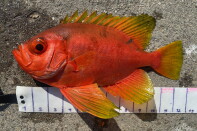 The creatures are here because of warm waters associated with El Niño, but the climate system could also threaten native species that aren’t used to the heat.
 -
 Federal changes starting in 2027 could impact 1 million L.A. County enrollees.


"With the uncovering of massive public benefits fraud across the United States, the Trump administration is laser-focused on eliminating and preventing fraud in public benefits programs," said the cable that referred specifically to most non-immigrant visa applications and was sent on Monday.
The cable, a copy of which was obtained by The Associated Press, urged consular officers to ensure that foreigners wanting to travel to the U.S. "have been fully vetted and screened" for whether they may rely on public services before they are issued a visa.
The cable noted several times that it is up to the applicant to prove that they would not apply for public benefits while in the U.S. and said consular officers who suspect the applicant might apply should require them to fill out a form proving their financial bona fides.
President Trump's administration has already severely restricted immigrant and non-immigrant visa processing for citizens of dozens of countries, many of them in Africa, Asia and Latin America.
Consular officials must consider a range of personal details
The November guidance on which Wednesday's decision is based directed U.S. Embassy and consulate officials to comprehensively and thoroughly vet visa applicants to demonstrate that they will not need to rely on public benefits from the government any time after their admission in the U.S.
Sponsored message

Secretary of State Marco Rubio makes a statement to reporters while meeting with Armenian Foreign Minister Ararat Mirzoyan at the State Department in Washington on Tuesday.
(
Cliff Owen
/
AP
)
While federal law already required those seeking permanent residency or legal status to prove they wouldn't be a public charge, Trump in his first term widened the range of benefit programs that could disqualify applicants, and the guidelines in the cable appear to go further in scope.
Immigrants seeking entry into the U.S. already undergo a medical exam by a physician who's been approved by a U.S. Embassy. They are screened for communicable diseases, like tuberculosis, and asked to disclose any history of drug or alcohol use, mental health conditions or violence. They're also required to have a number of vaccinations.
The new directive expanded those with more specific requirements. It said consular officials must consider a range of specific details about people seeking visas, including their age, health, family status, finances, education, skills and any past use of public assistance regardless of the country. It also said they should assess applicants' English proficiency and can do so by conducting interviews in English.
Experts said at the time it could further limit who gets to enter the country at a time when the Republican administration is already tightening those rules.
The countries affected by the suspension announced on Wednesday are: Afghanistan, Albania, Algeria, Antigua and Barbuda, Armenia, Azerbaijan, Bahamas, Bangladesh, Barbados, Belarus, Belize, Bhutan, Bosnia, Brazil, Burma, Cambodia, Cameroon, Cape Verde, Colombia, Congo, Cuba, Dominica, Egypt, Eritrea, Ethiopia, Fiji, Gambia, Georgia, Ghana, Grenada, Guatemala, Guinea, Haiti, Iran, Iraq, Ivory Coast, Jamaica, Jordan, Kazakhstan, Kosovo, Kuwait, Kyrgyzstan, Laos, Lebanon, Liberia, Libya, Macedonia, Moldova, Mongolia, Montenegro, Morocco, Nepal, Nicaragua, Nigeria, Pakistan, Republic of the Congo, Russia, Rwanda, Saint Kitts and Nevis, Saint Lucia, Saint Vincent and the Grenadines, Senegal, Sierra Leone, Somalia, South Sudan, Sudan, Syria, Tanzania, Thailand, Togo, Tunisia, Uganda, Uruguay, Uzbekistan and Yemen.
Copyright 2026 NPR

Senior Vice President News, Editor in Chief


