




One year ago, Congress defunded public media. Now that we're 100% community funded, please become a sustaining member or increase your existing membership today.
14 LA newsrooms showed up at coffee shops for a day. Here's what we learned

The LAist community engagement team tabled at Café Calle in South Central for Local News Day LA.
(
Alejandra Santamaria
/
LAist
)
As local news organizations nationwide navigate funding cuts, rapid changes in technology and shifting audience habits, building relationships directly with communities has become more important than ever. It’s also something newsrooms don’t have to do alone.
On June 27, LAist, The LA Local and 12 other L.A.-area newsrooms came together to meet community members at coffee shops across Los Angeles County. We called it Local News Day LA.
Here are five things we learned from holding this event for the first time, why it was worth it, and how other local newsrooms can organize their own events.
1. Communities will show up when you show up
This pop-up event, organized by The LA Local, allowed residents across the county to meet the journalists covering their communities.
A total of 14 media partners participated. In addition to LAist and The LA Local, newsrooms included CalMatters, LA Public Press, L.A. Taco, Calo News, Long Beach Post, The Eastsider, Los Angeles Reporting Collective, LA Sentinel, Q Voice News and USC Annenberg Media.
Sponsored message
More than 400 people participated in the event by talking with a local journalist. For some, it was the first time they'd ever heard of that newsroom.
While LAist and The LA Local have both made it a recurring practice to meet community members in person to hear what's on their minds, many other newsroom partners didn't have experience with this kind of event. Afterward, journalists at some of those newsrooms said they were surprised that local residents actually wanted to meet them and share story ideas or feedback on recent coverage like the Lineage Fire in Boyle Heights.

CalMatters spoke with community members at Yia Caffe in Boyle Heights for Local News Day LA.
(
The LA Local
)
Others were also amazed at people’s willingness to travel from coffee shop to coffee shop to connect with as many media partners as possible.
Local News Day LA gave them a reason to come out and partners to help with the logistics and outreach — and people showed up to meet them.
3X Match Today!
2. What we heard from residents checked our assumptions and shaped our reporting
LAist spoke with dozens of community members at Café Calle in South Central for Local News Day LA. Among other topics, they shared with us that the effect of the immigration raids is still present in South Central, the neighborhood needs more spaces and resources for school-age kids, and that residents are frustrated by the amount of trash on the streets, even after cleaning it up themselves.
Sponsored message
At a few coffee shops around L.A., The LA Local and Boyle Heights Beat spoke with residents in Koreatown, Inglewood and Boyle Heights. At OpenMarket, folks shared their concern regarding street safety.
At Asteroid Vinyl Cafe in Inglewood, residents expressed frustration over what they said was lack of transparency on Destination Crenshaw’s timeline for completion. And at Picaresca Cafe, community members shared their thoughts on the elected officials’ response to the Lineage Fire that impacted Boyle Heights and East LA.

The Long Beach Post staff spoke with community members at Wrigley Coffee in Long Beach for Local News Day LA on June 27.
(
Kris Kelley
/
The LA Local
)
The Long Beach Post connected with residents at Wrigley Coffee in Long Beach. Some asked for more coverage of small businesses, more coverage in West Long Beach and more investigative reporting.
These conversations reflected what people were thinking about long after the day's headlines had faded and gave participating newsrooms strong signals about how to focus their time and energy next.
3. Collaboration can be more powerful than competition
Local News Day LA was the first collaboration held across all our news partners — and it started small. In 2025, LAist and The LA Local shared best practices and tips with each other from our respective experiences tabling and meeting community members to see what we could learn.
Sponsored message
We then started brainstorming a larger collaboration, eventually rallying our partner newsrooms and holding a workshop on what we learned about planning a successful tabling event, engaging residents and collecting feedback to influence our journalism.
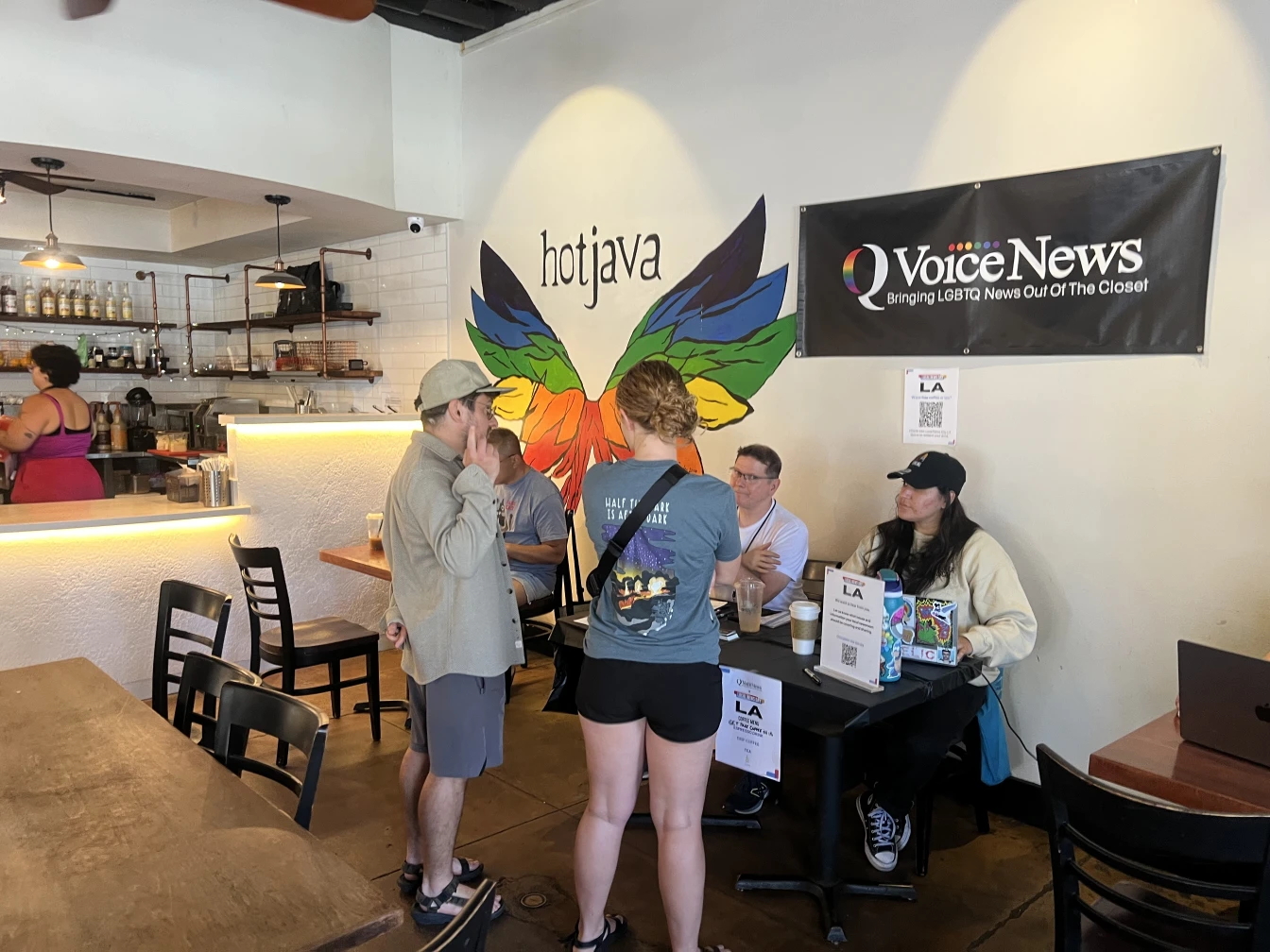
Q Voice News spoke with residents at Hot Java in Long Beach for Local News Day LA.
(
The LA Local
)
Local News Day LA showed that collaboration can strengthen local journalism. In an industry where newsrooms often compete for scoops, audiences and resources, the event demonstrated what’s possible when they work together to listen to communities and better serve residents.
4. Partnerships with local businesses can benefit everyone
While Local News Day LA was primarily about connecting residents with their local news outlet, it was also about supporting and elevating local businesses — each newsroom partnered with coffee shops across L.A. The LA Local supported all media partners with $250 to provide free coffee to residents that came out and connected.
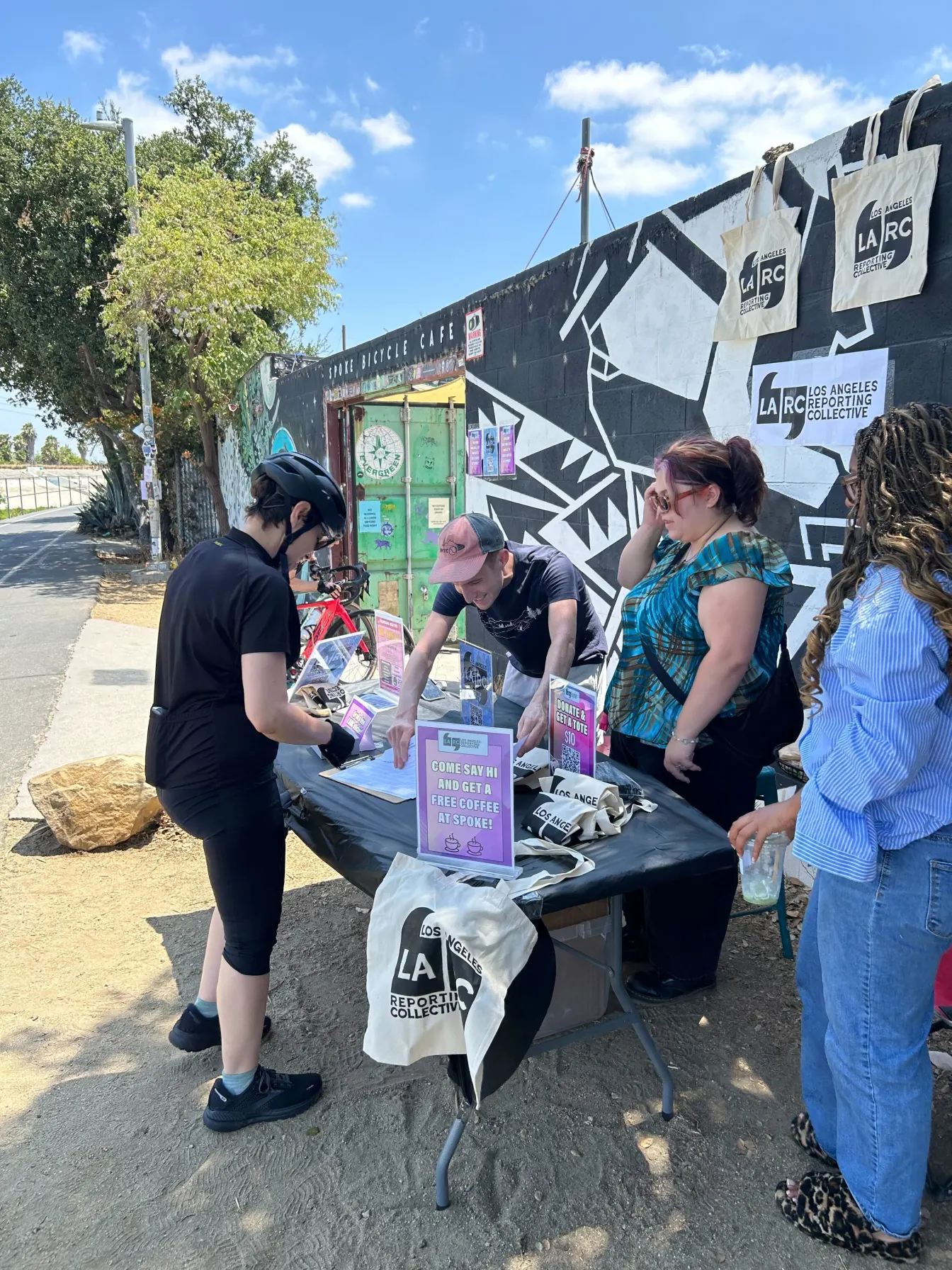
Los Angeles Reporting Collective engaged with community members at Spoke Bicycle Cafe in Frogtown for Local News Day LA.
(
The LA Local
)
Newsrooms got a chance to see the kind of relationships coffee shops already had with people in the neighborhood. LAist journalists learned what a trusted community hub Café Calle was for residents nearby — and we're already making plans to go back. Coffee shops participating in the event also received additional foot traffic while also offering a space for community members to have conversations with journalists and each other.
Sponsored message
5. Any newsroom can do this — here’s how

The LAist community engagement team tabled at the Crenshaw Farmers Market on July 11.
(
Sabrina Sanchez
/
LAist
)

An LA Local cafecito event at Asteroid Vinyl.
(
Amir Vera
/
The LA Local
)
If you're at a newsroom that's never done a pop-up community tabling event, you can get started on your own even without a big collaboration. Here's a quick checklist:
- Reach out to the local business or program in a specific community you want to engage with.
- Clearly outline your goal for tabling. Is it to hear about a specific topic or is it more general?
- Promote your event. Talk about it on your social media, newsletters, website and any other format you have to engage with your audience.
- Tell community members about your organization! Now is the time to distribute merch or resources you might have. LAist has shared a resource on how to talk to a journalist when at tabling events.
- Take notes! You’ll want to reflect on them later.
- Have people sign up so you can follow up. Think about a quick check in through a QR code or physical sign-in sheet.
- Plan out what is next from what you’ve heard. Reflect on the response and share immediate follow ups for news coverage.
More to consider
Here are other details to get a grasp on before and after your event:
- Which days and times have the highest foot traffic? Check with the business or venue you're partnering with. (It might be during the weekend.)
- Set your budget if you’re buying participants coffee or any food from the shop, or if you need to order new merch.
- Think about naming your event if you plan to do more of them at local shops.
- Have an activity in mind so participants feel engaged (e.g. spinning wheel, drawing, coloring, etc.).
- Consider your existing relationships with partners you can lean on.
- Prepare and discuss with your team! Try a few check-ins ahead of the event and a debrief to discuss what worked.
For more information about how to be a part of LAist’s reporting, visit LAist.com/Community. If you want to read more about The LA Local’s community engagement work, visit TheLALocal.org.

Senior Vice President News, Editor in Chief


