




One year ago, Congress defunded public media. Now that we're 100% community funded, please become a sustaining member or increase your existing membership today.
Long Beach’s Peninsula keeps washing away. The fix could cost hundreds of millions

Several tons of sand eroded, exposing the wooden bulkhead along the Peninsula in Long Beach earlier this month. Waves pounded the seawall for days, causing damage to nearby homes.
(
Thomas R. Cordova
/
Long Beach Post
)
Let’s hope that by the time you’re reading this, the waters are calm as ever and the streets are bone dry.
If not, Long Beach might as well be called Short Beach.
After waves supercharged by Hurricane Marie battered a series of beachside homes, tore up a city boardwalk and ripped away enough sand to reveal a decades-old bulkhead, Long Beach is looking at spending roughly $3 million to stabilize the Peninsula, with a much larger price tag looming.
In a memo released Friday, city Public Works Director Joshua Hickman lays out the damage plainly:
- About 200 feet of boardwalk decking and support beams need to be replaced.
- Roughly 1,000 feet of bulkhead needs new top caps.
- And another 450 feet of bulkhead planks have to be restored.
That repair work alone is expected to cost about $1.5 million, funded through the city’s Tidelands Emergency Reserve, with crews aiming to finish by November.
With the city entering a super El Niño season, Hickman recommends the city spend another $230,000 moving 50,000 to 100,000 cubic yards of sand into place, ahead of an $11.4 million dredging project in the Alamitos Bay entrance channel that, starting next month, will pump about 415,000 cubic yards of sand onto the Peninsula, potentially widening the beach by up to 250 feet. Originally not expected to be done until early next year, the city is pushing to have it done by the end of November.
To get all of that moving at once, the city is asking the council to release $3 million from its $10.3 million emergency reserve, with more funding requests expected as the response continues.
But those repairs are dwarfed by what engineers say is needed to keep the Peninsula beach above water and habitable going forward. What gets approved, however, will depend on the damage done by storms.
Sponsored message
-
 The opening of the long-awaited LAX People Mover train is getting pushed back, again.
 -
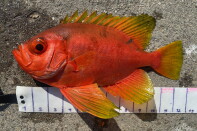 The creatures are here because of warm waters associated with El Niño, but the climate system could also threaten native species that aren’t used to the heat.
 -
 Federal changes starting in 2027 could impact 1 million L.A. County enrollees.


The possibilities
From five plans optioned by the city’s contracted design firm, Moffatt & Nichol, the city wants to advance a $6.8 million plan for designing and permitting a rock revetment — a wall of boulders that would sit behind the beach as a backup, built only if the sand washes away again. Only $1 million in design money is currently covered.
Coastal engineers hired after the storm evaluated five versions of a rock or sheet-pile barrier, ranging from $1.5 million for a simple sheet-pile wall to nearly $9.5 million for a full engineered rock revetment built to withstand a 100-year storm. Every option trades something away — beach space, permitting speed, or the boardwalk’s historic look — for protection, and the firm’s bottom-line advice was to move sand now while permitting the rock wall to sit ready.
That boardwalk is not easily replaceable, even setting aside the money. Built in the 1920s, at 9 feet wide and 3,600 feet long, it’s the last wooden boardwalk in Los Angeles County.
When hurricane-charged waves hit, city crews responded with thousands of sandbags and 16-hour shifts of bulldozers building berms that washed away as they went up. The total cost of that emergency response is still being tallied, but officials expect it will easily clear $1 million.
Not a new problem
It’s also important to remember that past efforts to combat sand loss have come and gone.
Sponsored message
Three million cubic yards of sand brought in the 1940s were gone by the ’80s; 100,000 cubic yards added in 1979; a failed plan in 1980 to bring a mix of imported river sand and birdseye gravel; 145,000 cubic yards across dumpings from 1991 to 1993 between 55th Place and the Belmont Shore Pier; 200,000 cubic yards of sand from 55th to 72nd place in 1996; installation of artificial reef (made of polyester bags) in 1991 and separately, artificial kelp installed through the 1980s; emergency additions in 1992, 1993 and 1994. All of it either washed away or simply didn’t work, and the reef was eventually pulled out.
The road ahead
Today, the city’s baseline defense is a maintenance routine — bulldozers and dump trucks moving sand from the western side, where it currently piles up, back to the winnowing eastern flank, five days a week, at a cost of $1 million to $1.5 million a year — that adds no new sand to the system at all.
And the timing couldn’t be any more swell. Long Beach sits smack in the middle of the Eastern Pacific hurricane season, which runs from mid-May through November, when southerly swells charged by storms off Mexico and Baja California are most likely to find the one gap in the city’s usually sheltered coastline. Marie found it two weeks ago, sending waves 10 feet high that battered the Peninsula, toppling sand-berms and sending enough water ashore to force the evacuation of about 20 homes.
Now forecasters are warning of a strong El Niño winter, and both the city and state have declared emergencies that allowed them to open their pocketbooks much quicker and easier.
Eventually, officials say it may cost $150 million to $350 million for a full habitat and shoreline restoration of the Peninsula — funded partly by state mitigation credits — as the kind of project that would take massive amounts of approvals and planning and likely some delays. The City Council for now has approved $30,000 to look into it further.
It’s a decision that might not sit well with many, at a time when gas is inching north of $6 a gallon, personal budgets must now accommodate rain gear and extra supplies and a time when the city’s own budget has gone belly up, forcing layoffs and ends to popular programs.
Sponsored message
But the consequence of doing nothing, of surrendering stretches of beach to the sea, attacks the city’s very name.

Senior Vice President News, Editor in Chief


