Download our app for the optimal streaming experience
Listen
Now Playing
Listen
This archival content was originally written for and published on KPCC.org. Keep in mind that links and images may no longer work — and references may be outdated.
Southern California is shifting all around us as the population grows, development booms and housing prices climb. There are few better indicators of these changing times and our changing region than our stories about rent.
We asked you to flash back to your first apartment in L.A. and share how much you paid and when and where it was. You gave us tales of simpler times ($35/month rent in the 1960s), roach-filled dirt-cheap first apartments and rent checks that doubled over just a few years.
Your stories didn’t just give us numbers to crunch and compare, but also a panoramic, memory-filled snapshot spanning decades that tells us what rent has meant — and still means — to SoCal life.
The easier rents of yore:
Lise Matthews, via Facebook message:
My first rental in L.A. cost $145/month for a two-bedroom house with a yard in Venice in 1977. I was a recently divorced 27-year-old single mom working to put myself through architecture school. Without that very reasonable rent, I would never have been able to go to school and develop a career.
I went on to run my own architectural firm for 35 years, employing many people over the years. More than just my family benefitted from that reasonable rent.
I was in a single apartment on Beachwood Drive, down the street from the back of Columbia Studios in Hollywood. It was in a bungalow court and it had a pull-down bed, a pull-down table and a pull-down ironing board. I was 21 and it was heaven to me.
In 1972 I had a room in a dilapidated house with a group of grad students in Pasadena. I made about $90 a month working part-time as a lab assistant at Caltech and paid about $30 a month for my share of the rent. Good times.
2015, #myfirstrent, paid $1,200 for a one-bedroom in KTown that had no hot water or parking. Studio in same area WITH hot water and parking, $1,500+. Fifteen minutes north on the same street, Vermont, and three years later, rent for one bedroom has jumped to $1,900. At least it has hot water.
Gottlieb elaborated a bit more on the rattlesnake situation:
I lived in a house on Beverly Glen that had been divided into three apartments. Three really crummy apartments that were big on charm — and code violations. My shower emptied into the hillside next to us... just a plastic pipe poking out the wall, no sewage line, nothing.
There were holes everywhere, in the walls, floors, screens... I had a rattlesnake come in my window one evening and I called 911. It disappeared into the walls, and the firemen left for a "real emergency."
I paid $1,400 for a two-bedroom one-bath with a parking space right off Sunset Boulevard in Silver Lake in 2011. It was so affordable for the time and the location. This was the view from my kitchen window, and I had a backyard and private balcony access to the backyard from my room. Wish times were this easy again. It's now $3,000 a month.
$900/month in 2002 for a cute one-bedroom in Los Feliz (with two enormous closets and a kitchen big enough to cook in). The rent didn't budge for the five years I lived there. I loved that apartment so much. I think it's going for almost $2K these days.”
Ben Moses, via email:
July 1977: One-bedroom loft, park view, Los Feliz, $275. Drive time to Santa Monica, 20 minutes.
July 1987: One-bedroom, no view, Los Feliz, $700. Drive time to Santa Monica, 35 minutes.
July 1997: Three-bedroom house, big yard, hills above Barham Boulevard, $2,500. Drive time to Santa Monica, 45 minutes
July 2007: Three-bedroom apartment, view, central Paris, France, $3,800. Drive time to Santa Monica... who cares?
July 2017: Three-bedroom house, small secluded yard, Studio City (south of Ventura). $4,600. Drive time to Santa Monica: Don't even think about it.
One year ago, Congress voted to defund public media, eliminating a critical $1.7 million from our budget every year going forward. But they couldn’t silence us, and we’re not going anywhere. LAist is now 100% community funded and that means we’re taking our future into our own hands and turning to you to keep local reporting strong.
You come to LAist because you want independent reporting and trustworthy local information. Our nonprofit newsroom doesn’t answer to shareholders looking to turn a profit. Instead, we answer to you and our communities. We are free to follow facts wherever they lead and to hold power to account without fear or favor. Our only loyalty is to our readers and listeners and our mission: to inform, engage, and strengthen Southern California’s communities.
If this story helped you, please become a monthly member today to help sustain this mission. It just takes 1 minute to donate below.







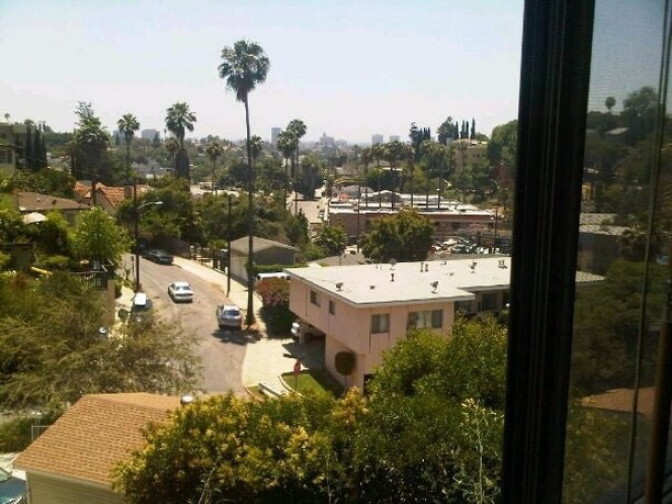 (Photo: @elainemarisol via Instagram)


